For nearly a decade, minimalism in residential design meant cool tones, stark contrasts, and a clinical precision that could feel more museum than home. White walls, grey surfaces, chrome fixtures, and an absence of warmth that prioritized visual cleanliness over emotional comfort.
That era is definitively over. What has replaced it is not maximalism or clutter — it is warm minimalism. A design philosophy that retains the clean lines and intentional restraint of minimalism while adding the warmth, texture, and organic character that make spaces feel genuinely liveable.
What Warm Minimalism Looks Like
Colour Palette
The warm minimalist palette draws from nature rather than industry:
- Cream and warm white replace blue-white and cool white
- Warm greige (grey with beige undertones) replaces cool grey
- Soft beige and sand replace stark white
- Earthy accents — sage green, terracotta, warm clay, muted olive — replace black and chrome accents
- Rich natural tones — walnut, oak, linen, stone — form the material backbone
The overall effect is calm and grounded. The space feels restful rather than clinical.
Materials
Warm minimalism prioritizes natural, tactile materials over manufactured surfaces:
- Natural wood (white oak, walnut, maple) with visible grain and matte finishes
- Natural stone (travertine, limestone, honed marble) with organic patterns and imperfect surfaces
- Linen and cotton textiles in window treatments, upholstery, and accents
- Matte plaster or limewash wall finishes that add subtle texture
- Handmade tile with slight variations in colour and shape (rather than machine-perfect porcelain)
Lines and Forms
The minimalist framework remains — clean lines, uncluttered surfaces, intentional negative space — but with softened edges:
- Curved furniture and fixtures (arched doorways, rounded mirror frames, curved cabinet pulls)
- Organic shapes rather than strict geometry
- Visible craftsmanship — joinery details, hand-finished surfaces — that signal human touch
- Intentional imperfection that prevents the space from feeling sterile
How to Apply Warm Minimalism in a Renovation
Kitchen
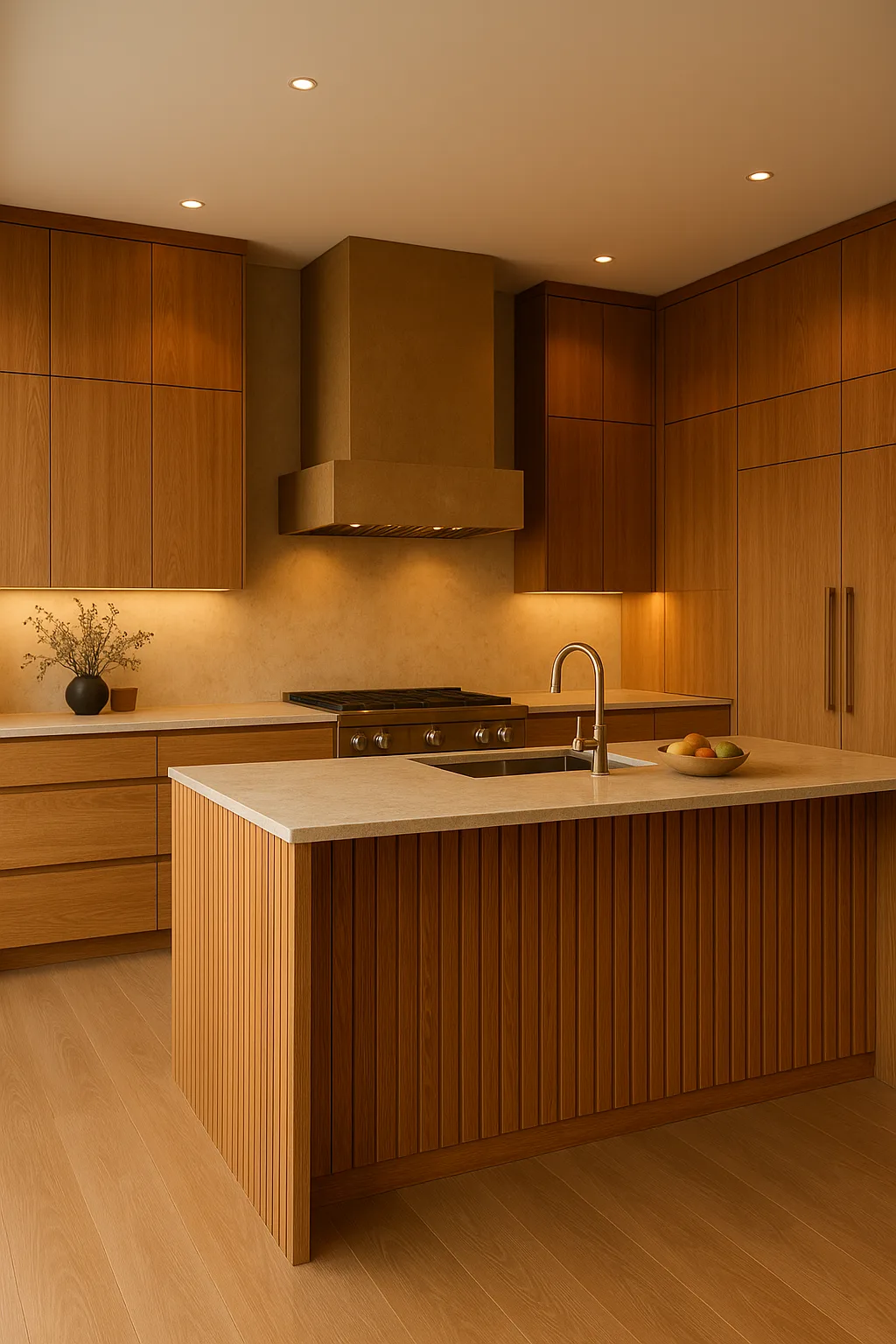
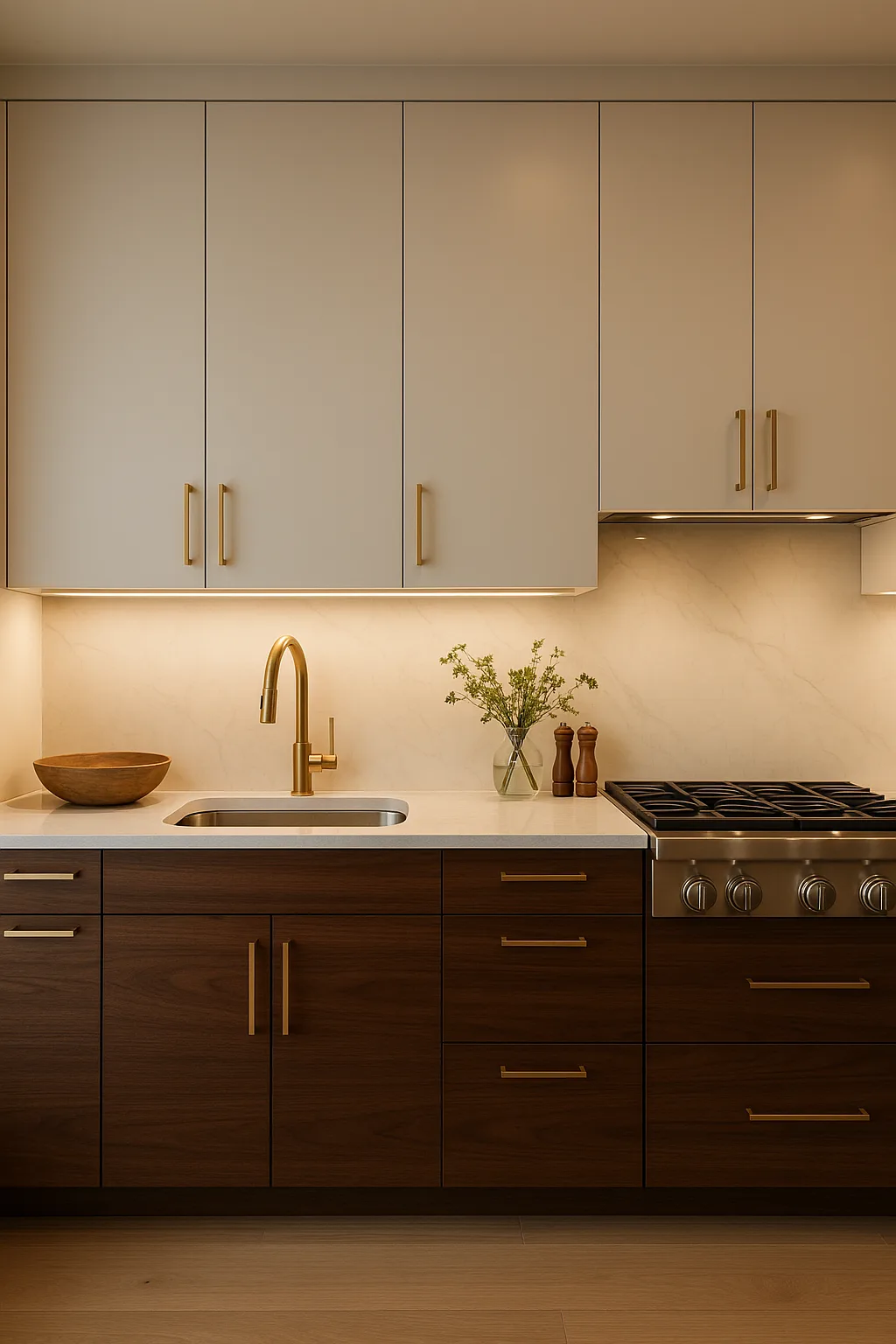
- Cabinetry: Flat-panel or slab-front doors in natural wood or painted warm cream. Handle-free with push-to-open mechanisms for the cleanest lines.
- Countertops: Honed marble or warm-toned quartz with subtle veining. Avoid stark white and cool grey.
- Backsplash: Zellige tile (Moroccan handmade tile with slight colour variation) or large-format porcelain in a warm neutral.
- Hardware (if used): Brushed brass or warm bronze. Minimal, sculptural profiles.
- Lighting: Warm-temperature bulbs (2700K-3000K). Pendant lights in natural materials (linen, wood, handblown glass).
Bathroom
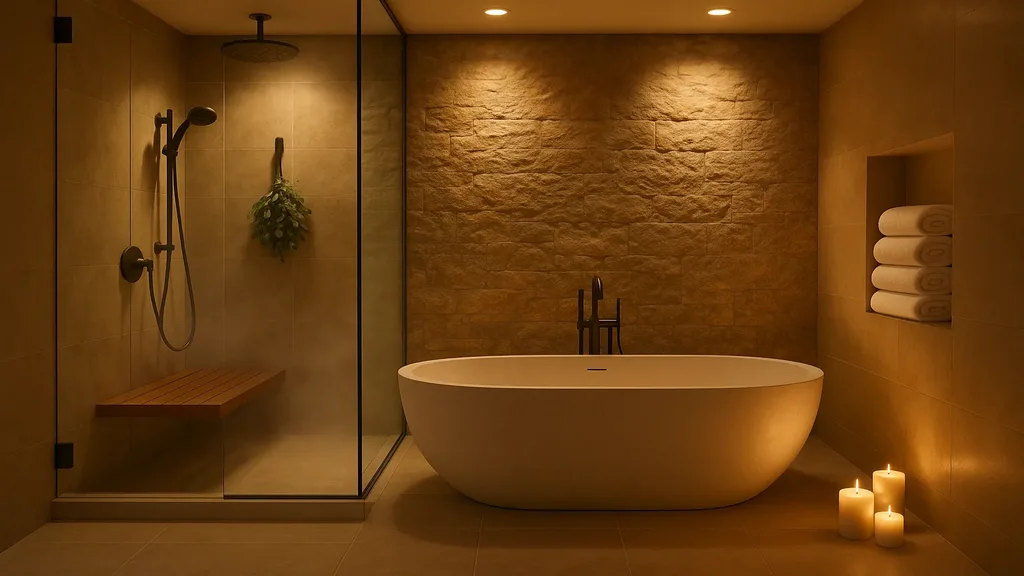
- Tile: Large-format porcelain or natural stone in warm tones. Travertine and limestone are particularly well-suited to warm minimalism.
- Vanity: Floating, in natural wood with simple lines. Open lower shelf rather than closed cabinet for visual lightness.
- Fixtures: Matte brass, brushed gold, or matte black. Avoid polished chrome.
- Accents: A live-edge wood shelf, a woven basket for towels, a potted plant. Minimal but warm.
Living Spaces
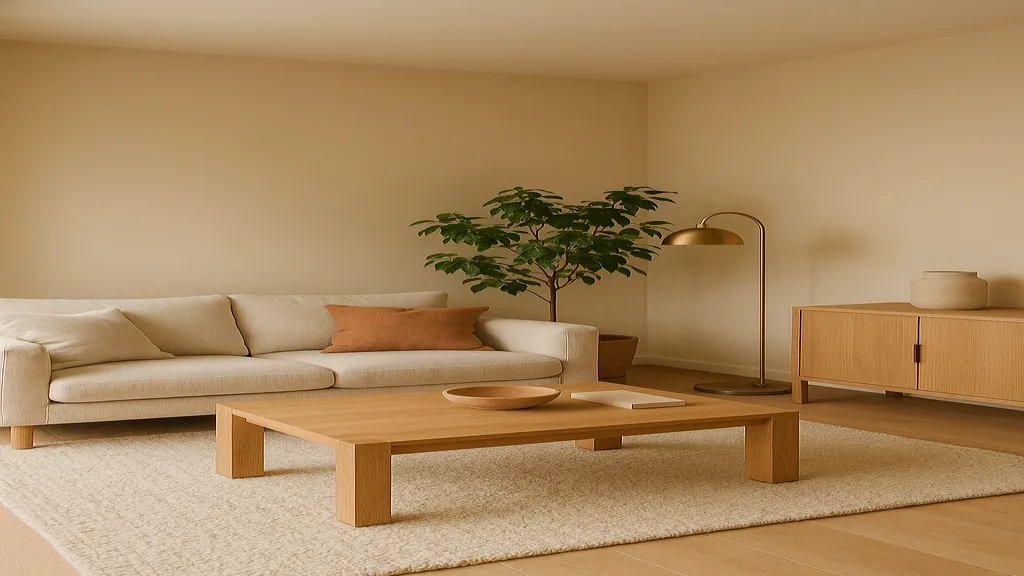
- Walls: Warm white or limewash finish. Accent walls in a muted earth tone.
- Flooring: Wide-plank engineered hardwood in a natural or light wash finish. Matte, not glossy.
- Built-ins: Natural wood shelving with minimal styling — a few books, a ceramic vase, a single piece of art. The empty space is as important as the objects.
- Textiles: Linen curtains, wool throw, cotton cushions. All in the warm neutral palette.
Transitioning a Grey-Toned Home to Warm Minimalism
If your home was renovated in the grey era, you can transition without a full gut renovation:
Quick Wins
- Replace cool-white paint with warm white (Benjamin Moore White Dove or Swiss Coffee are reliable choices)
- Swap chrome hardware for brushed brass
- Replace cool-toned light fixtures with warm alternatives
- Add natural wood accessories — cutting boards, floating shelves, wood-framed mirrors
- Introduce warm textiles — linen curtains, cream cushions, a natural-fibre rug
Moderate Changes
- Repaint lower cabinets or the kitchen island in a warm tone
- Replace bathroom vanity light with a warm-finish fixture
- Install warm-temperature LED bulbs throughout (2700K)
- Add board-and-batten or shiplap accent wall in a warm neutral
Larger Investments
- Replace grey countertops with warm-toned quartz or natural stone
- Refinish grey cabinets or replace doors with warm-tone alternatives
- Install new flooring in warm-toned engineered hardwood
Why Warm Minimalism Has Staying Power
This is not a trend that will be replaced in two years. Warm minimalism is a correction — a return to design principles that prioritize human comfort alongside visual beauty. People want their homes to feel warm, not just look clean. They want natural materials that age gracefully, not manufactured surfaces that look dated when the next colour trend arrives.
If you are planning a renovation in the Niagara Region and want to explore a warm, minimal aesthetic, contact JVR Complete for a design consultation. We will help you create a space that feels calm, warm, and unmistakably yours.