The spa bathroom has evolved from an aspirational Pinterest board into a realistic renovation goal. The materials, fixtures, and design approaches that create a spa-like experience at home have become more accessible, and the pandemic permanently elevated the importance of personal wellness spaces.
At JVR Complete, spa-inspired bathroom renovations have become our most requested project category. Here is how we approach creating a daily retreat in your own home.
The Design Principles of a Spa Bathroom
Spa design is not about a single feature — it is about a holistic environment that engages all the senses. The most successful spa bathrooms integrate these elements:
1. Warmth Underfoot
Heated tile floors are the foundation of a spa bathroom experience. Stepping onto a warm floor transforms the entire feeling of the space, especially on cold Niagara mornings. Electric radiant heating mats installed beneath tile cost $700-$1,100 for a typical bathroom and provide daily comfort that clients consistently rate as their favourite feature.
2. The Shower Experience
A spa shower goes beyond basic function:
- Rainfall showerhead mounted flush with the ceiling, providing a gentle, enveloping cascade of water
- Handheld shower on an adjustable slide bar for practical daily use
- Thermostatic valve that maintains your preferred temperature precisely, eliminating cold-water surprises when someone flushes a toilet elsewhere in the house
- Steam capability (for premium installations) that transforms the shower into a personal steam room
- Generous proportions — a spa shower is at minimum 36x48 inches, ideally 48x60 inches or larger
3. The Soaker Tub
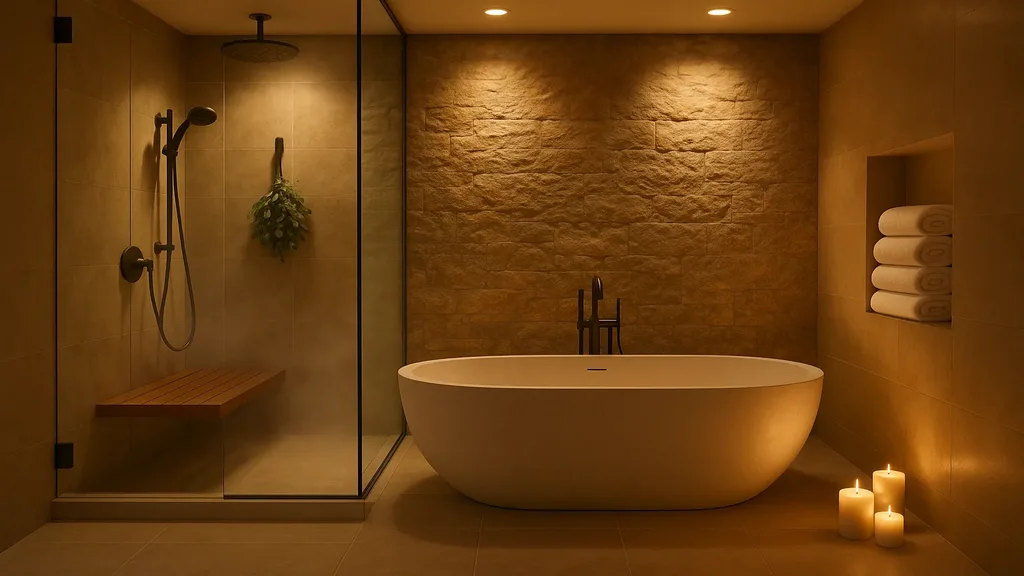
A freestanding soaker tub — positioned as a sculptural focal point rather than pushed against a wall — anchors the spa aesthetic. The tub becomes the room’s centrepiece, viewed from the doorway as an invitation to unwind.
Design considerations:
- Position the tub where natural light reaches it (near a window is ideal)
- Use a floor-mounted or wall-mounted tub filler rather than a deck-mounted faucet for a clean, sculptural look
- Ensure the floor beneath and around the tub is waterproof tile (not hardwood, which will warp from splashing)
- Provide a nearby surface for candles, a glass, or a book
4. Natural Materials
Spa environments use materials that connect to nature:
- Natural stone (marble, travertine, quartzite) for floors, walls, or feature areas
- Natural wood accents (teak shower bench, walnut floating shelf, wood-framed mirror)
- Matte finishes that feel organic rather than glossy and industrial
- Warm colour palettes — cream, warm grey, sage, terracotta — drawn from earth tones
5. Intentional Lighting
Spa lighting is layered and dimmable:
- Task lighting at the vanity (warm, bright, shadow-free for grooming)
- Ambient lighting — recessed or cove-mounted — providing soft, even illumination
- Accent lighting — LED strips in shower niches, under floating vanities, or behind mirrors — creating warmth and visual depth
- All circuits on dimmers so you can shift from bright morning to soft evening with one control
6. Ventilation and Humidity Control
A spa bathroom generates significant moisture — especially with rainfall showers, soaker tubs, and heated floors. Proper ventilation is critical:
- Quiet, high-CFM exhaust fan (150+ CFM for bathrooms with a shower and tub) with a humidity sensor that activates automatically
- Timer control that runs the fan for 20 minutes after you leave the room
- Operable window for natural ventilation in warmer months
Without proper ventilation, even the most beautiful bathroom will develop mould, peeling paint, and moisture damage within a few years.
Design Mistakes to Avoid
Too Many Competing Materials
A spa environment is calm and cohesive. Using six different tile patterns, three different metals, and four colours creates visual chaos, not tranquility. Limit your palette to two or three materials and one or two accent metals.
Insufficient Storage
Cluttered countertops and exposed toiletries undermine the spa aesthetic. Incorporate ample concealed storage — recessed medicine cabinets, vanity drawers, linen closets — so that surfaces remain clean and minimal.
Cold, Clinical Design
A spa is warm and inviting, not a white-tiled operating room. Warm wood accents, soft textiles (plush towels, a bath mat), and warm-temperature lighting prevent the space from feeling sterile.
Cost Expectations
A spa-quality bathroom renovation in the Niagara Region typically ranges from $35,000 to $65,000, depending on the scope:
- Mid-range spa bathroom ($35,000-$45,000): walk-in shower with rain head, heated floor, quality tile, upgraded vanity and fixtures
- Premium spa bathroom ($45,000-$65,000+): curbless shower, freestanding tub, natural stone, custom vanity, LED accent lighting, premium fixtures
These investments transform a utilitarian room into the most enjoyable space in your home — a space you use twice daily, every day, for years to come.
If you are ready to create your own spa retreat, contact JVR Complete for a design consultation.