The kitchen-table office served its purpose during the emergency phase of the pandemic. But as remote work becomes permanent for millions of Canadians, homeowners are realizing that a proper home office is not a luxury — it is a functional necessity that directly affects their productivity, wellbeing, and career performance.
At JVR Complete, home office renovations have become one of our most requested projects. Here is how we approach them.
Why the Kitchen Table Does Not Work Long-Term
Working from a kitchen table, dining room corner, or bedroom desk causes problems that compound over months and years:
- Ergonomic issues: Dining chairs are not designed for 8-hour sitting. Kitchen tables are the wrong height for sustained typing. Back pain, neck strain, and repetitive stress injuries are common results.
- Sound problems: Open living spaces mean every family noise — conversations, television, children playing — bleeds into your work calls. Video conference quality suffers.
- Visual distractions: Working in a shared space means constant visual interruptions. Even with discipline, the presence of household activity reduces focus.
- Work-life boundary erosion: When your office is your kitchen, you never truly leave work. The psychological separation of closing a door at the end of the day matters.
Design Principles for a Home Office That Performs
1. Dedicated Space with a Closable Door
The single most important feature of a home office is the ability to close it off. A spare bedroom, a section of a finished basement, or a converted garage with a door creates the physical and psychological boundary between work and home.
2. Natural Light (But Positioned Correctly)
Natural light is essential for wellbeing and video call quality, but window placement relative to your desk matters:
- Light from the side is ideal — it illuminates your face for video calls without creating screen glare
- Light directly behind you creates a silhouette effect on camera — your face appears dark while the window blows out
- Light directly in front of you causes screen glare and eye strain
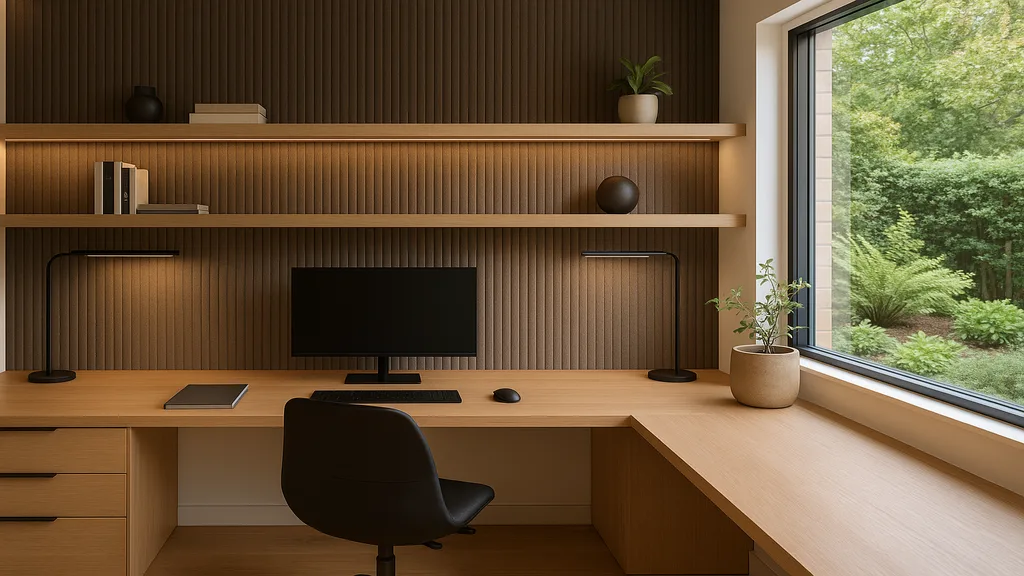
I position desks perpendicular to windows whenever possible, with supplementary task lighting for overcast days and evening work.
3. Sound Isolation
If your home office shares a wall with a living space, children’s bedroom, or entertainment area, sound isolation is worth the investment:
- Resilient channel on shared walls decouples the drywall from the studs, breaking sound transmission paths
- Sound-insulation batts (mineral wool or specialized acoustic insulation) fill the wall cavity
- Double layers of 5/8” drywall with staggered seams add mass that blocks sound
- Solid-core door replacing the standard hollow-core interior door eliminates the biggest sound leak
These measures can reduce sound transmission by 15-20 decibels — the difference between clearly hearing a conversation in the next room and hearing only a faint murmur.
4. Electrical and Connectivity Infrastructure
A proper home office needs more electrical capacity than most spare bedrooms provide:
- Dedicated 20-amp circuit for computer equipment (prevents tripped breakers and voltage fluctuations)
- Multiple outlet locations at desk height and floor level — not just one outlet behind the bed frame
- USB-A and USB-C outlets integrated into the desk area for device charging
- Hardwired ethernet drop for reliable, high-speed internet (WiFi is convenient but a wired connection is more stable for video calls and large file transfers)
- Cable management built into the desk and wall — hidden channels, grommets, and raceways that keep cables invisible
5. Custom Built-In Desk and Storage
A built-in desk designed specifically for your work style outperforms any store-bought desk:
- The desktop height matches your ergonomic requirements (standard 28-30 inches, adjusted for your chair height)
- The depth accommodates your monitor(s) at proper viewing distance (24-30 inches for single monitor, deeper for dual setup)
- Integrated drawers and file storage are sized for what you actually store
- Floating shelves and overhead cabinets use vertical space for books, supplies, and display items
- The finish matches your home’s design language — this room should feel like part of your home, not a corporate cubicle
Project Examples
Spare Bedroom Conversion
A 10x12 spare bedroom in St. Catharines converted to a dedicated home office. Custom L-shaped built-in desk with walnut top, white painted cabinetry below, floating shelves above. Resilient channel sound isolation on the shared wall with the children’s bedroom. Two hardwired ethernet drops. Existing window repositioned relative to the desk for optimal light. Budget: $12,000-$18,000.
Basement Home Office Suite
A section of an unfinished basement in Thorold converted to a private office with separate HVAC zone, egress window for natural light, custom built-in desk and bookshelf wall, and a small meeting area with a sofa for client video calls. Budget: $25,000-$35,000.
The Investment Perspective
A well-designed home office is not just a comfort upgrade — it is a professional investment. If working from home saves you a 60-minute daily commute, that is 250 hours per year of reclaimed time. If a dedicated office increases your productivity by even 10 percent, the renovation pays for itself through your career performance.
If you are ready to create a home office that matches the quality of your work, contact JVR Complete for a design consultation.