Of all the tile patterns available to homeowners, herringbone holds a unique position. It is simultaneously one of the oldest and one of the most contemporary-feeling patterns in existence. I have installed herringbone in century homes in Niagara-on-the-Lake and in brand-new builds in Grimsby, and it works beautifully in both contexts.
But herringbone is also one of the most demanding patterns to install correctly. Here is what you need to know.
A Pattern with 2,000 Years of History
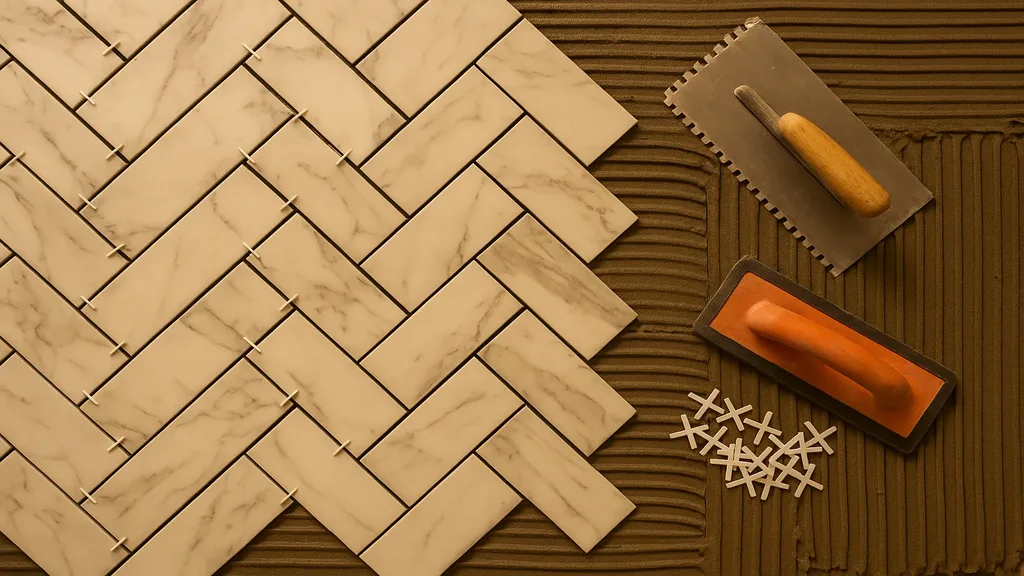
The herringbone pattern — rectangular units laid at alternating 45-degree angles to create a V-shape — dates back to the Roman Empire, where it was used in road construction. The interlocking pattern distributed load more effectively than straight rows, preventing stones from shifting under cart traffic.
The same principle applies to flooring today. Herringbone creates a visually dynamic surface that draws the eye and adds architectural interest to any room. But unlike the Romans, we are choosing it for beauty, not structural engineering.
The Geometry Behind the Pattern
Herringbone works because of mathematics. Each tile is placed at a precise 90-degree angle to its neighbour, creating a continuous zigzag pattern. The angles create directional movement — your eye follows the V-shapes across the floor or up the wall, creating a sense of energy and sophistication.
There are two main variations:
Classic Herringbone
Tiles are laid at 90-degree angles with the ends meeting the sides of adjacent tiles. This creates a staggered, woven appearance. The pattern can be oriented horizontally, vertically, or diagonally relative to the room.
Chevron
Often confused with herringbone, chevron uses tiles that are cut at an angle so the ends meet in a clean, continuous V-shape. Chevron creates sharper, more defined lines and a more contemporary feel. It requires specially cut tiles, which increases cost.
Where Herringbone Works Best
Not every space benefits equally from herringbone. Here are the applications where I consistently recommend it:
Bathroom Floors
A herringbone floor in a small to medium bathroom adds tremendous visual interest without overwhelming the space. I typically use a smaller format tile — 50x150mm or 75x300mm — for bathroom floors to create a refined, detailed pattern.
Kitchen Backsplashes
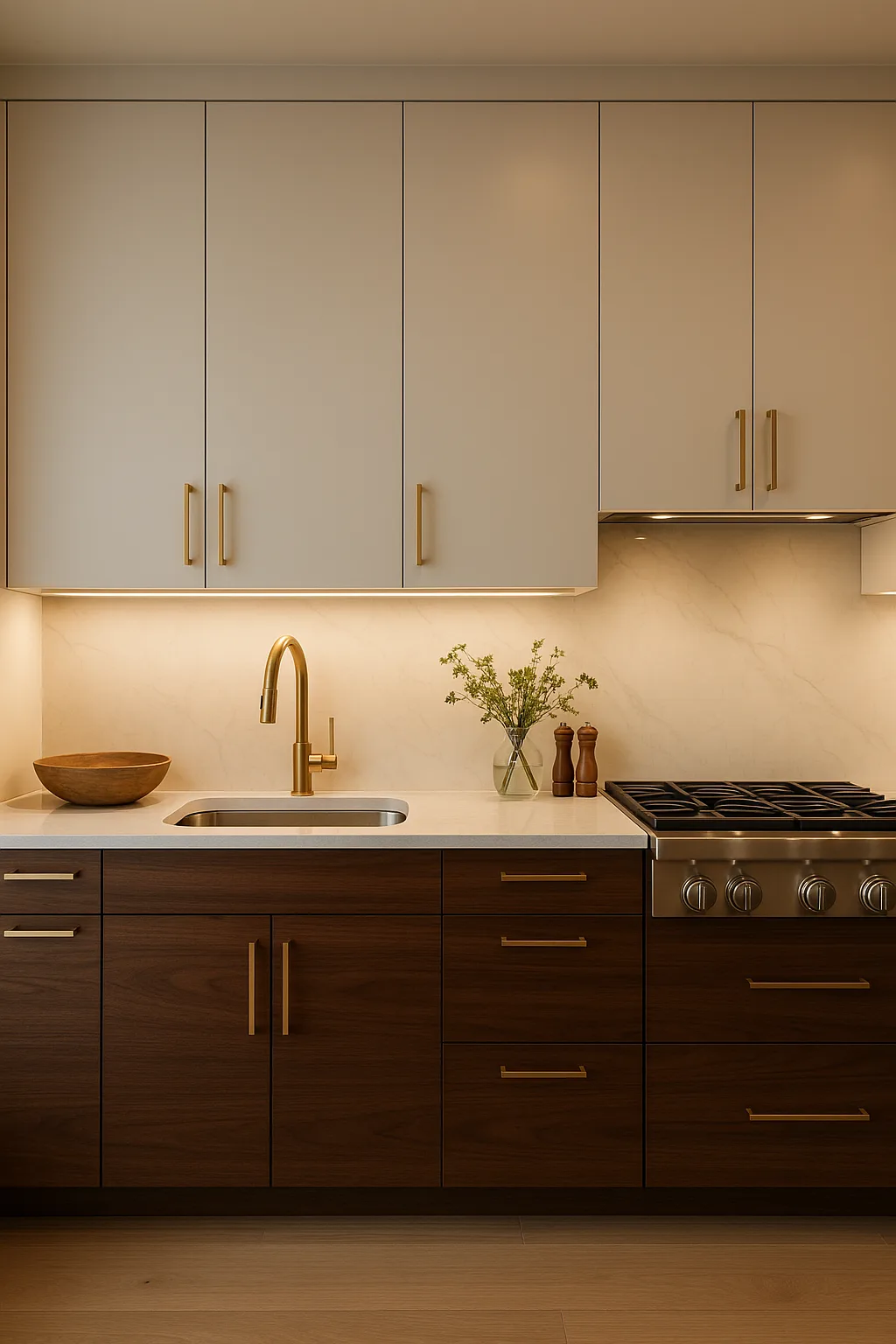
Herringbone backsplash behind a range or along a full kitchen wall creates a design focal point that elevates the entire kitchen. Subway tiles in a herringbone layout cost no more than a standard running bond but look dramatically more intentional.
Feature Walls
In an entryway, powder room, or fireplace surround, a herringbone accent wall creates immediate visual impact. I often use natural stone — marble or travertine — for feature wall herringbone to add texture and depth.
Shower Floors and Niches
A herringbone pattern in a shower niche, using a mosaic-scale tile, creates a beautiful detail that catches the eye without competing with larger wall tiles.
The Installation Challenge
Here is where many contractors stumble. Herringbone requires meticulous planning and execution:
Layout precision: Every tile must be placed at an exact 90-degree angle. Even a 1-degree deviation compounds across the pattern, creating a visible wobble by the time you reach the opposite wall. I use laser levels and chalk lines at multiple points to maintain alignment throughout the installation.
Cut management: Herringbone generates significantly more cuts than running bond or stack patterns, especially along the edges of the room. Each edge tile must be individually measured and cut at an angle. This increases installation time by 30 to 50 percent compared to standard layouts.
Substrate preparation: Because herringbone patterns make any floor imperfection more visible (the angular lines highlight waviness), the substrate must be perfectly level before installation begins. I always self-level floors before laying herringbone.
Grout line consistency: With so many small joints at varying angles, maintaining consistent grout width requires patience and high-quality tile spacers. I use precision cross spacers at every junction to ensure uniformity.
Material Choices for Herringbone
The tile you choose affects how the herringbone reads:
- White marble herringbone — classic, timeless, and luxurious. Works in traditional and contemporary settings.
- Grey porcelain herringbone — modern and versatile. Great for floors where durability matters.
- Wood-look porcelain herringbone — brings the warmth of a hardwood herringbone floor without the moisture concerns in bathrooms and kitchens.
- Coloured ceramic herringbone — bold and energetic. Perfect for backsplashes and accent areas.
- Natural stone herringbone — each tile has unique veining, creating an organic, one-of-a-kind pattern.
Cost Considerations
In the Niagara Region, expect herringbone tile installation to cost 20 to 40 percent more than standard running bond, primarily due to the additional labour time for layout, cutting, and precision work. The tile material cost is identical — the premium is entirely in the craftsmanship.
For a typical bathroom floor (40 to 60 square feet), this translates to roughly $800 to $1,500 in additional labour. For the design impact it delivers, I consider this one of the best value upgrades in any renovation.
Is Herringbone Right for Your Project?
If you are planning a bathroom, kitchen, or entryway renovation in the Niagara Region and want to explore herringbone or other premium tile patterns, contact JVR Complete for a design consultation. I will help you choose the right tile, pattern, and scale for your space.