From approximately 2012 to 2020, the grey-and-white kitchen reigned supreme. Grey shaker cabinets, white quartz countertops, grey subway tile backsplash, stainless steel appliances, and chrome hardware. You know this kitchen. You have seen it in every home renovation show, every real estate listing, and possibly in your own home.
It was clean, safe, and universally inoffensive. It was also, by 2021, exhaustingly predictable.
The design world has moved on. Here is where it is heading.
What Killed the Grey Kitchen
Several forces converged to end the grey era:
Saturation
When every new kitchen and every renovated kitchen looks the same, the style loses its ability to feel fresh, modern, or aspirational. By 2019, the grey-and-white kitchen had become the new beige — so common that it no longer read as a design choice, just a default.
Emotional Coldness
After spending unprecedented time at home during the pandemic, homeowners craved warmth. Grey and white surfaces, combined with cool-toned chrome fixtures and stainless appliances, created kitchens that felt sterile rather than welcoming. The desire for warmth, comfort, and personality began driving design preferences.
Material Innovation
Manufacturers responded to the market shift with expanded warm-tone offerings. Quartz countertops with warm-veined patterns, porcelain tile with natural stone and wood textures, and cabinet manufacturers offering expanded finish palettes all made it easier to choose warmth over grey.
What Is Replacing Grey
Warm Wood Tones
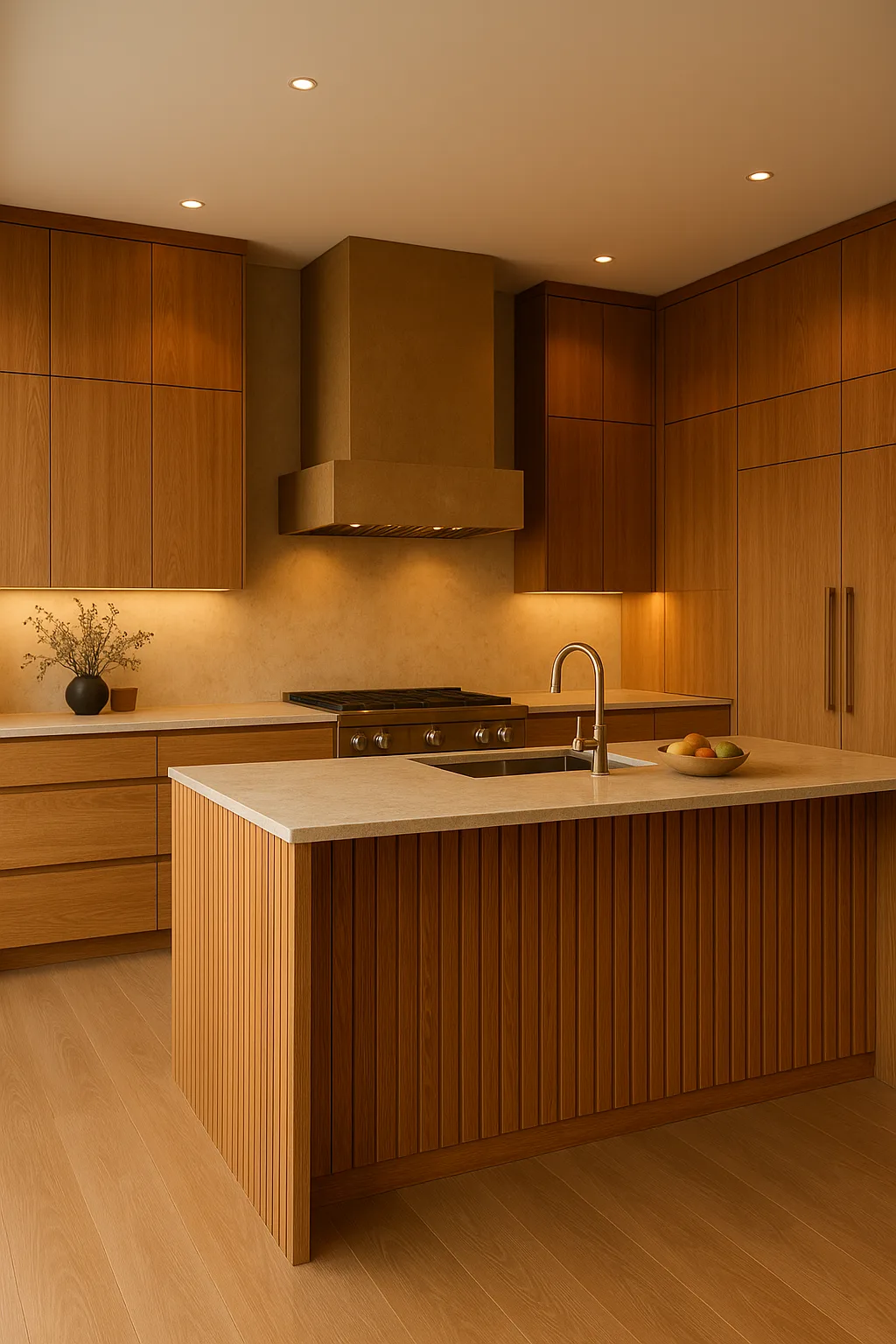
Natural wood cabinetry — white oak, walnut, and maple with clear or light stains — is the leading alternative to painted grey cabinets. Wood brings organic warmth, visual texture, and a connection to nature that no paint colour can replicate.
The current approach is refined: flat-panel or slab-front doors in a warm wood with consistent grain, paired with stone countertops that echo the natural theme. This is not the honey oak of the 1990s — it is curated, intentional, and paired with modern hardware and fixtures.
Two-Toned Cabinetry
Rather than a single colour throughout, the two-tone kitchen uses different colours or materials on uppers versus lowers, or perimeter versus island. Popular combinations:
- White uppers with a warm wood island
- Sage green lowers with white uppers
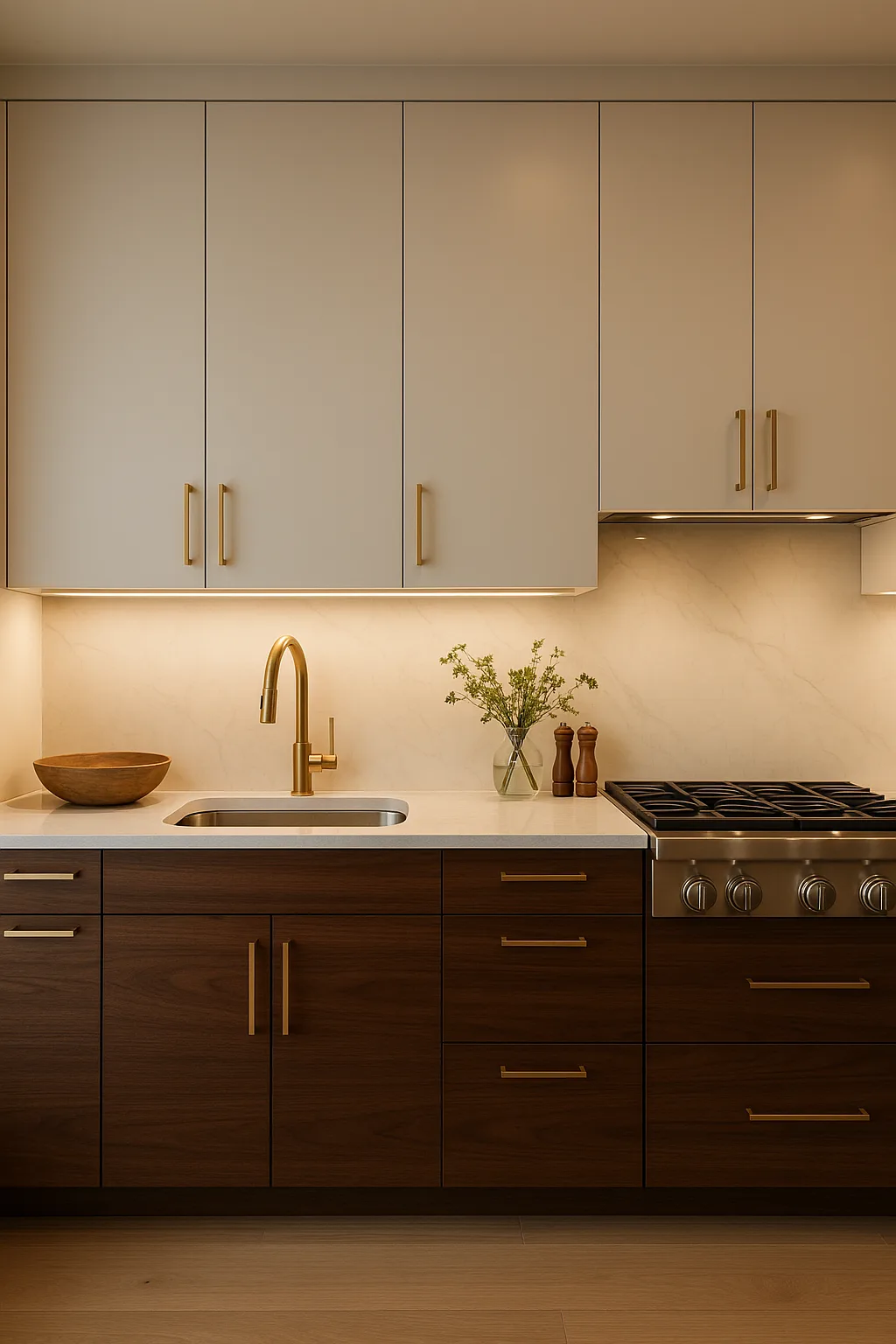
- Navy or charcoal lowers with white or cream uppers
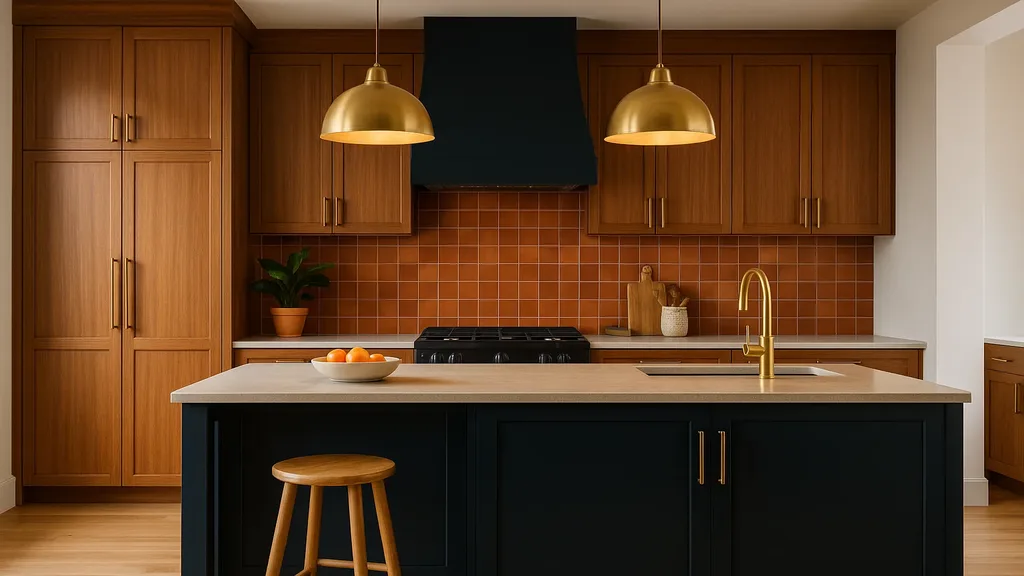
- All wood perimeter with a contrasting painted island
The two-tone approach adds visual depth and personality that a single-colour kitchen cannot achieve.
Earthy Colour Palettes
The colours replacing grey are drawn from nature: sage green, warm taupe, terracotta, soft navy, olive, and warm cream. Benjamin Moore’s colour trends reflect this shift, with rich, earthy tones dominating their recent palettes.
These colours work because they complement natural materials (wood, stone, brass) rather than competing with them.
Warm Metals
Chrome and stainless are giving way to brushed brass, aged bronze, and matte gold hardware and fixtures. These warm metals create a cohesive warm palette when paired with wood cabinetry and natural stone, whereas chrome created a cold, clinical feel.
Natural Stone Patterns
Quartz countertops with strong veining patterns that mimic Calacatta or Statuario marble are replacing the plain white quartz of the grey era. The veining adds movement, warmth, and visual interest to the kitchen’s largest horizontal surface.
Timeless Choices for Niagara Homeowners
If you are planning a kitchen renovation, here are my recommendations for choices that will feel current for the next 10-15 years:
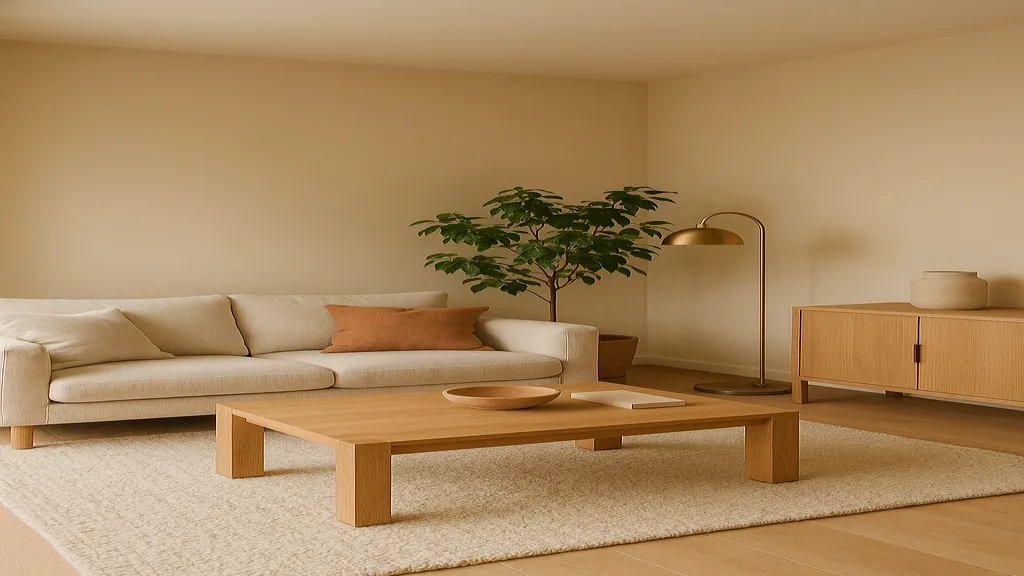
- Choose warm over cool: Cream, warm white, and natural wood tones will outlast the next trend cycle
- Mix materials: A combination of painted and natural wood surfaces adds depth that a single finish cannot
- Invest in hardware: Brushed brass or matte black hardware can be changed relatively easily if trends shift, but choose quality pieces that feel substantial
- Let the countertop have character: Natural stone patterns or quartz with visible veining adds personality that plain white surfaces lack
- Add texture: Fluted wood panels, herringbone backsplash, board-and-batten islands — texture creates visual richness that flat surfaces miss
Should You Replace Your Grey Kitchen?
If you renovated your kitchen in the past decade with grey cabinets and white countertops, take a breath. Your kitchen is not ugly — it is well-made and functional. The question is whether it feels like you.
If it does, keep it. If it feels cold, impersonal, or dated, a strategic update can transform the space without a full gut renovation:
- Repainting lower cabinets or the island in a warm tone (sage, navy, warm taupe)
- Replacing chrome hardware with brushed brass
- Adding a warm wood floating shelf or two to break up upper cabinet monotony
- Installing undercabinet lighting with warm colour temperature (2700K-3000K)
These targeted updates can shift the entire feel of a grey kitchen for a fraction of a full renovation cost.
If you are planning a kitchen renovation or refresh in the Niagara Region, contact JVR Complete for a design consultation. Let us find the palette that makes your kitchen feel warm, personal, and timeless.