If there is one design detail that has defined the current era of interior design, it is fluting. Vertical grooves carved or applied to flat surfaces — on kitchen islands, bathroom vanities, accent walls, and cabinetry panels — have become one of the most requested features in our renovation projects.
And unlike many trends that flame out quickly, fluted detailing has genuine staying power because it is rooted in architectural tradition, not novelty.
What Is Fluted Detailing?
Fluting consists of evenly spaced vertical channels (grooves) carved into a flat surface. The channels create a rhythmic pattern of light and shadow that adds depth, texture, and visual interest to otherwise flat panels.
The technique dates back to ancient Greek and Roman architecture, where fluted columns were a defining feature of classical orders. When light hits the grooves, each channel casts a subtle shadow, creating a sense of depth and dimensionality that flat surfaces cannot achieve.
In modern interior design, fluting has moved from columns to horizontal surfaces: cabinet panels, island fronts, vanity bases, wall treatments, and even furniture.
Where Fluting Works Best
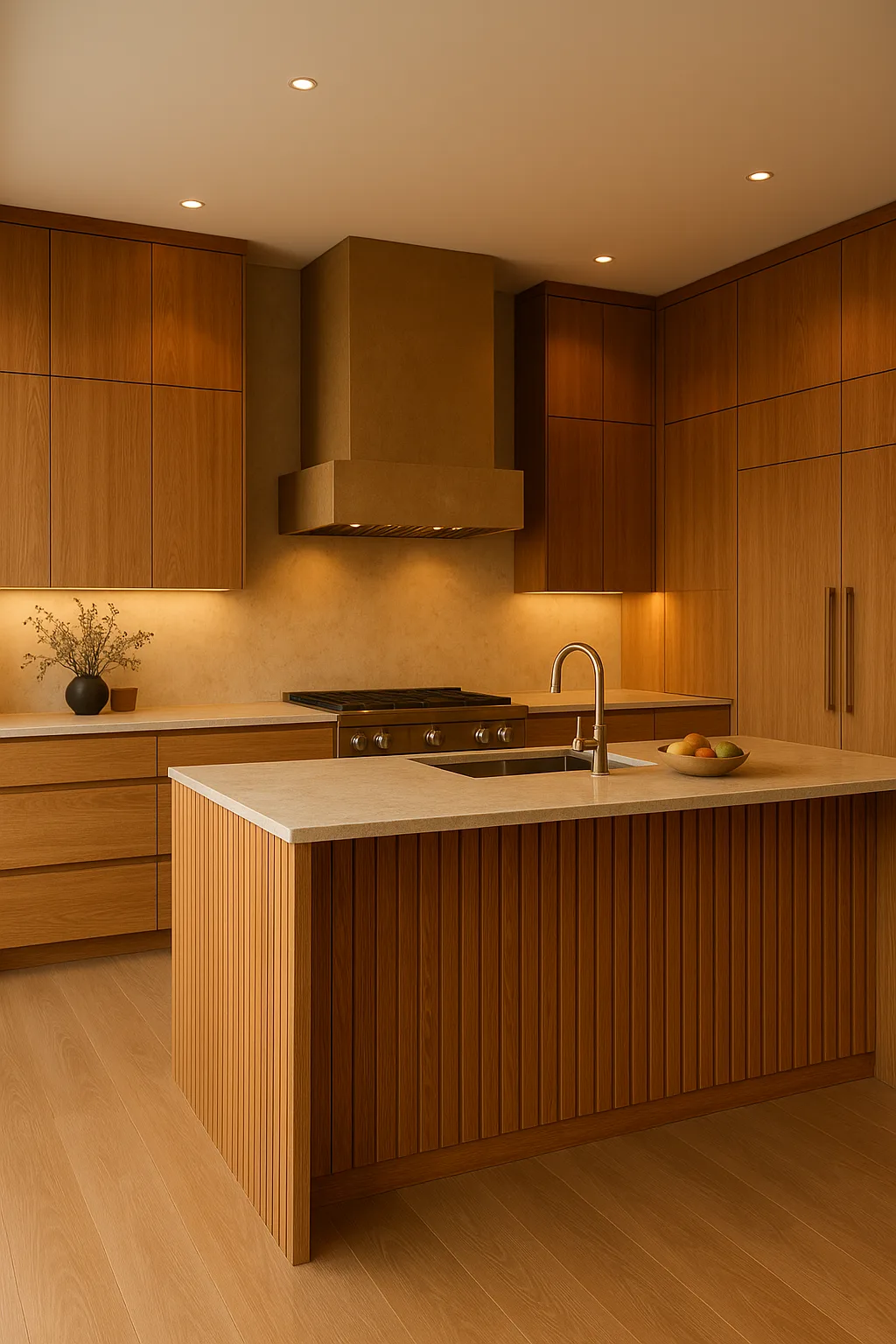
Kitchen Islands
The island front is the most popular application. Fluted panels on the front and sides of a kitchen island create a furniture-like quality that distinguishes the island from the surrounding cabinetry. When paired with a contrasting countertop material (butcher block on a painted island, or stone on a wood island), the fluted texture elevates the island into a design centrepiece.
Bathroom Vanities
Fluted detailing on a floating vanity creates a spa-like, boutique-hotel aesthetic. The vertical lines complement the vertical water flow of a shower and the vertical lines of wainscoting or board-and-batten wall treatments.
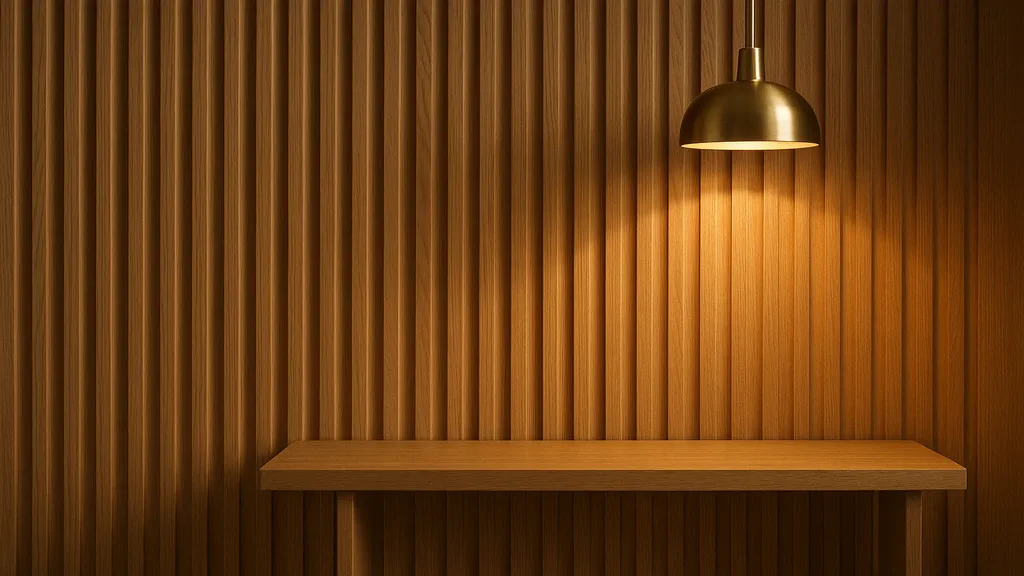
Accent Walls
A full-height fluted wood accent wall — behind a bed, flanking a fireplace, or in an entryway — creates dramatic architectural interest. The repetitive vertical lines draw the eye upward, making ceilings feel taller.
Cabinet End Panels
Fluted panels on the exposed ends of cabinet runs (at the end of a peninsula, flanking an appliance, or at the transition to a hallway) add a custom, finished appearance that flat end panels lack.
Material and Method Options
Solid Wood Fluting
Channels are routed directly into solid wood panels using a CNC router or table-mounted router with a fluting bit. This produces the most refined result with crisp, consistent channels. White oak, walnut, and maple are the most popular choices.
Cost: Higher material and labour cost, but the quality and longevity are excellent.
MDF Fluting
MDF (medium-density fibreboard) machines cleanly and takes paint beautifully. For painted fluted panels (which are the majority of installations), MDF is the practical choice. The channels are routed into the MDF panel, which is then primed and painted to match the surrounding cabinetry.
Cost: Moderate. MDF is less expensive than solid wood and produces equally clean lines when painted.
Applied Moulding
For a budget-friendly approach, individual half-round or fluted moulding strips are applied to a flat panel surface. This creates the fluted appearance without routing channels into the panel itself. The result is slightly different — applied strips are raised above the surface, while routed channels are recessed into it — but the visual effect is similar.
Cost: The most affordable option, but requires careful spacing and adhesion to look professional.
Reeded vs. Fluted
A common point of confusion: fluting consists of concave (inward-curving) channels, while reeding consists of convex (outward-curving) rounded strips. In practice, the terms are often used interchangeably in the renovation industry, but the traditional distinction matters if you are matching historical architectural details.
Design Pairing Recommendations
Fluted detailing pairs beautifully with:
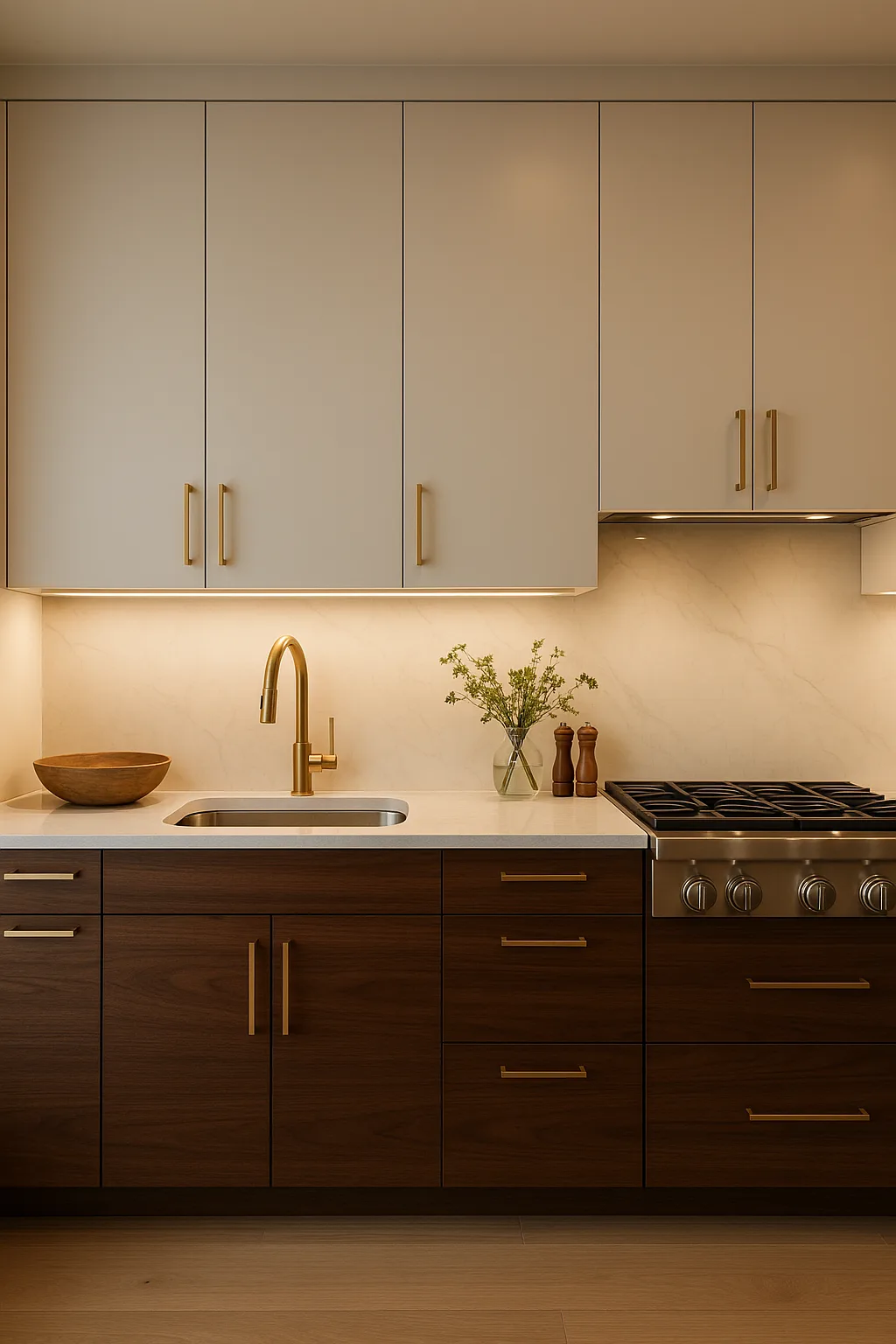
- Brushed brass or champagne gold hardware — the warm metal catches light in the grooves, enhancing the dimensional effect
- Natural stone countertops — the organic texture of stone complements the rhythmic regularity of fluting
- Simple, flat-panel cabinetry — fluting adds interest to an otherwise minimalist kitchen without competing with ornate door profiles
- Warm lighting — under-cabinet lighting or recessed lighting angled to cast across the fluted surface maximizes the shadow effect
Installation Quality Markers
How to tell professional fluting from amateur work:
- Consistent channel spacing: Every groove is exactly the same width apart. Inconsistency is immediately visible.
- Clean channel bottoms: No tear-out, no rough edges, no sanding marks visible inside the grooves.
- Proper sanding and finishing: The ridges between channels are smooth and the paint coverage is even in the grooves.
- Mitre returns at edges: Where fluted panels meet other surfaces, the channels end cleanly rather than being abruptly cut off.
At JVR Complete, custom woodworking and millwork is one of our core specialties. If you are interested in fluted detailing for your kitchen, bathroom, or living space, contact us for a design consultation.