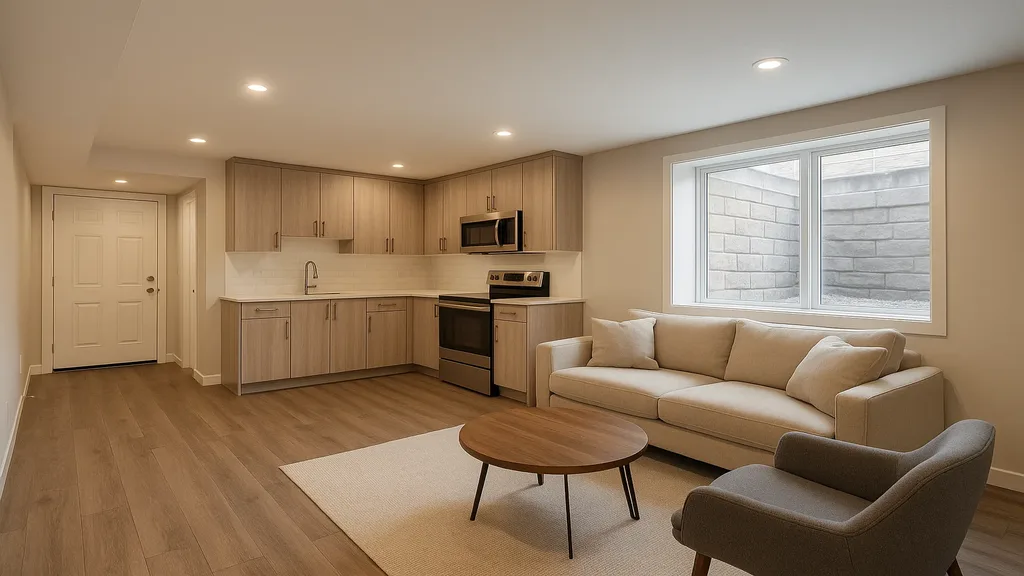
Creating a legal secondary suite — a self-contained apartment within your existing home — is one of the most financially impactful renovations a Niagara homeowner can undertake. Monthly rental income of $1,200 to $1,800 can cover a significant portion of your mortgage, offset renovation costs within a few years, and increase your property value.
But secondary suites are heavily regulated under the Ontario Building Code, and for good reason. These are living spaces where tenants sleep, cook, and bathe. Getting the safety requirements right is not optional.
Ontario Building Code Requirements for Secondary Suites
Ceiling Height
The minimum ceiling height for habitable rooms in a secondary suite is 1,950mm (6 feet 5 inches). This is the most common deal-breaker for basement suites in older Niagara homes, where original ceiling heights are often below 7 feet. If your basement does not meet this requirement, options include underpinning (lowering the basement floor) or choosing a different location for the suite.
Egress and Exit
Every secondary suite must have two means of egress — typically the main entrance and an emergency exit. In a basement suite, this means an egress window (minimum 380mm x 760mm clear opening, maximum 1,500mm sill height from the floor) or a separate exterior door.
Egress windows must be large enough for an adult to climb through in an emergency and for firefighters to enter. Many existing basement windows do not meet this requirement and need to be enlarged.
Fire Separation
The secondary suite must be separated from the primary dwelling by a fire separation with a minimum 45-minute fire resistance rating. This typically requires:
- 5/8” Type X drywall on the ceiling and all shared walls
- Fire-rated doors (20-minute rating minimum) at every opening between the suite and the main house
- Self-closing mechanisms on fire-rated doors
- Proper sealing of all penetrations (pipes, ducts, wires) through the fire separation with fire-rated caulk or putty pads
Smoke and Carbon Monoxide Alarms
Each level of the dwelling and each sleeping area must have interconnected smoke alarms. Carbon monoxide alarms are required near sleeping areas and on each level. All alarms in the secondary suite must be hardwired (not battery-only) and interconnected so that an alarm on one level triggers alarms on all levels within that unit.
Kitchen Requirements
The suite must include a kitchen with a sink, cooking appliance, refrigerator, and adequate counter space. The kitchen requires its own dedicated electrical circuit for the cooking appliance and refrigerator. A range hood or exhaust fan vented to the exterior is required.
Bathroom Requirements
At minimum, one three-piece bathroom (toilet, sink, shower or bathtub) is required. The bathroom must have an exhaust fan vented to the exterior.
Heating and Ventilation
The suite must have adequate heating to maintain a minimum temperature of 22 degrees Celsius. A separate HVAC zone or supplementary heating (electric baseboards, ductless mini-split) may be required. Natural ventilation (operable windows) is required in bedrooms and living areas.
Sound Transmission
While the Ontario Building Code specifies a minimum STC (Sound Transmission Class) rating of 50 between dwelling units, achieving a comfortable living environment typically requires exceeding this minimum. I recommend resilient channel, mineral wool insulation, and double drywall on shared ceiling/floor assemblies.
The Permit Process
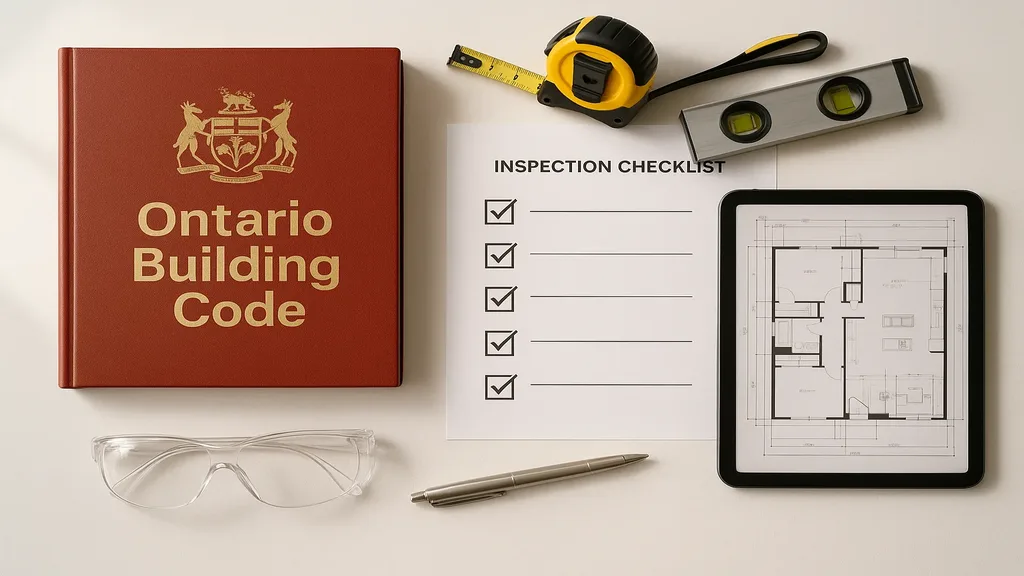
Secondary suite construction requires a building permit in every Ontario municipality. The application process in St. Catharines typically involves:
- Zoning verification — confirming your property’s zoning allows secondary suites
- Building permit application with detailed construction drawings showing fire separations, egress, plumbing, electrical, and HVAC
- Review period — typically 15-20 business days
- Multiple inspections during construction (framing, fire separation, plumbing rough-in, electrical rough-in, insulation, final)
- Final inspection and occupancy
Cost Expectations
A legal secondary suite in the Niagara Region typically costs:
- Basic suite (in an already-framed basement with adequate ceiling height): $40,000-$60,000
- Mid-range suite (adding a bathroom, kitchen, egress window, fire separation): $60,000-$80,000
- Premium suite (underpinning, separate entrance, high-end finishes, separate HVAC): $80,000-$120,000+
Revenue Potential
Average rental rates for legal basement apartments in St. Catharines range from $1,200 to $1,800 per month (2021 rates). At an average of $1,500/month, a suite generating $18,000 in annual rental income can pay back a $60,000 renovation investment in approximately 3.5 years — making it one of the strongest ROI renovations available.
Legal Considerations
Ontario’s Residential Tenancies Act governs the landlord-tenant relationship for secondary suites. Key points:
- You must register the suite as a legal rental unit
- Tenants have rights under the RTA regardless of whether the suite is permitted or not
- Proper insurance coverage (landlord rider on your homeowner’s policy) is essential
- You must comply with municipal property standards and fire code requirements
If you are considering adding a secondary suite to your Niagara home, contact JVR Complete for an assessment. Our basement finishing team will evaluate your property’s suitability and walk you through the requirements, costs, and timeline.