After years of kitchen consultations across the Niagara Region, I have developed a mental checklist of design mistakes that appear in roughly half the kitchens I assess. These are not structural failures or code violations — they are design decisions that undermine an otherwise functional kitchen.
The frustrating part is that most of these mistakes cost the same to avoid as they do to make. The difference is awareness and planning.
Mistake 1: The Single-Light-Source Kitchen
This is the most common kitchen design failure I encounter. A single overhead fixture — usually a flush-mount ceiling light or a lonely fluorescent tube — provides flat, shadowless illumination that makes the entire kitchen feel like a hospital corridor.
A well-lit kitchen needs three layers of light:
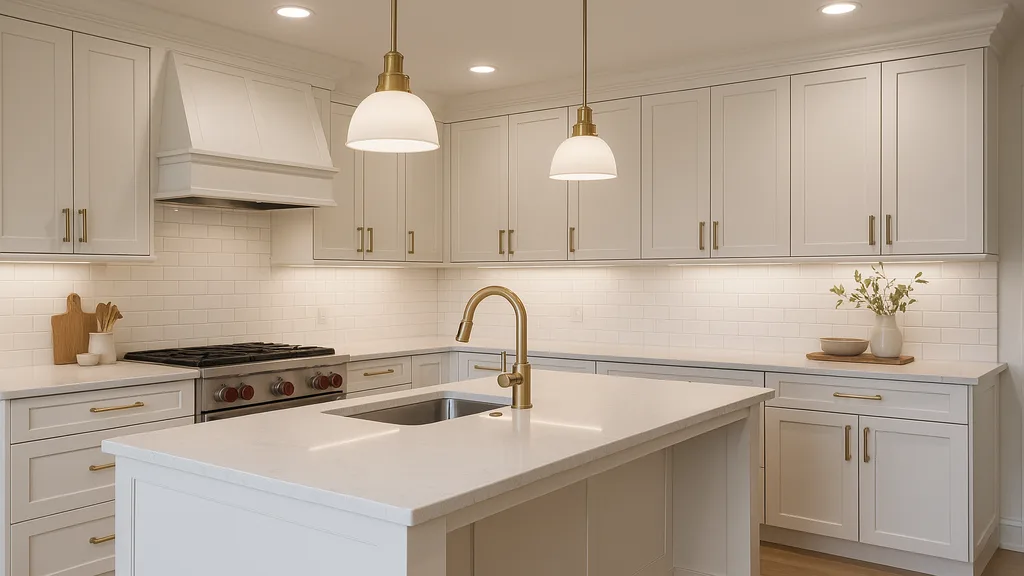
- Task lighting: Under-cabinet LED strips that illuminate countertop work surfaces. This is non-negotiable in a modern kitchen.
- Ambient lighting: Recessed pot lights or a central fixture that provides overall room illumination.
- Accent lighting: Pendant lights over an island, in-cabinet glass door lighting, or toe-kick lighting that adds warmth and visual depth.
Each layer should be on a separate switch or dimmer circuit so you can adjust the atmosphere from full-brightness cooking mode to soft evening entertaining mode.
Mistake 2: The Wrong-Scale Backsplash
Scale is one of the most misunderstood concepts in kitchen design. A tiny 2x2-inch mosaic tile can look busy and dated behind a modern range. A massive 24x48-inch slab can overwhelm a small galley kitchen.
The backsplash needs to relate proportionally to the cabinets, countertops, and overall room size. In general:
- Small kitchens benefit from medium-format tiles (3x6 subway or similar) that create visual rhythm without overwhelming
- Large kitchens can handle larger format tiles or natural stone slabs that create seamless, dramatic backdrops
- The pattern matters as much as the size — a herringbone or vertical stack layout can make the same tile feel completely different
Mistake 3: The Blocked Work Triangle
The kitchen work triangle — the relationship between the sink, stove, and refrigerator — has guided kitchen design for decades. When an island, peninsula, or poorly placed appliance interrupts the natural flow between these three points, the kitchen becomes frustrating to use regardless of how beautiful it looks.
I see this most often with oversized islands. Homeowners want the biggest island possible, not realizing that an island too large for the space creates tight walkways that force awkward sideways shuffling between the island and the counters.
The rule: maintain at least 42 inches (ideally 48 inches) of clearance on all sides of an island. If the room cannot accommodate that clearance with the island size you want, the island needs to shrink.
Mistake 4: Mismatched Hardware Finishes
Hardware is the jewellery of a kitchen, and like jewellery, it needs to be coordinated. I regularly see kitchens with chrome faucets, brushed nickel cabinet pulls, oil-rubbed bronze light fixtures, and stainless steel appliances — four different metal finishes competing for attention.
The current trend toward mixed metals can work beautifully, but it requires intentionality. Choose a dominant metal finish for hardware and fixtures, then introduce one (maximum two) accent metals in smaller, deliberate touches.
Mistake 5: Forgetting About Storage
It sounds obvious, but many kitchen renovations actually reduce usable storage. Homeowners remove upper cabinets for open shelving (which holds less and requires constant tidying), install a decorative range hood that eliminates a cabinet bay, or choose drawers exclusively without considering that some items are better stored on shelves.
Before finalizing any kitchen design, I inventory the client’s existing kitchen contents and plan storage to accommodate everything they actually use — plus 15 percent growth room.
Mistake 6: Countertop Overhang Errors
An island countertop overhang for seating needs to be at least 12 inches deep to be comfortable, with 15 inches being ideal. I regularly see overhangs of 8 or 9 inches — just deep enough that someone tries to sit there, but not deep enough to be comfortable. The stools end up pushed to the side, and the seating area goes unused.
Also consider the height: a standard 36-inch counter height requires 24-inch counter stools. A raised 42-inch bar height requires 30-inch bar stools. Mixing these up means either dangling feet or cramped knees.
Mistake 7: Ignoring Ventilation
A beautiful range hood that does not actually vent to the exterior is just a decorative box. Recirculating hoods filter some grease but do nothing for heat, moisture, or cooking odours. If you are investing in a kitchen renovation, invest in proper ventilation with an exterior duct run.
The Design-First Solution
Every one of these mistakes is avoidable with proper design planning before construction begins. At JVR Complete, the design phase is where we catch these issues — not after the cabinets are installed and the tile is grouted.
If you are planning a kitchen renovation in St. Catharines or anywhere in the Niagara Region, contact JVR Complete for a design consultation that prevents expensive mistakes.