A finished basement is one of the smartest investments a Niagara homeowner can make. It adds functional square footage at a fraction of the cost of a building addition, increases property value by 70-80% of the investment, and can generate rental income if built as a legal secondary suite.
But basement finishing in Ontario involves unique challenges — moisture management, ceiling height requirements, egress regulations, and specific Building Code requirements — that differ from above-grade renovation work. Here is the comprehensive guide.
Step 1: Moisture Assessment
Before any design or construction planning, the basement must be assessed for moisture. This is the most important step in the entire process, and skipping it leads to the most expensive failures.
Signs of Moisture Problems
- White crystalline deposits on concrete walls (efflorescence)
- Musty or mouldy smell
- Visible water stains or damp patches
- Peeling paint on concrete surfaces
- Condensation on cold surfaces during humid weather
Testing Methods
- Plastic sheet test: Tape a 2x2-foot sheet of clear plastic to the concrete wall or floor. Wait 48-72 hours. If moisture forms on the concrete side of the plastic, moisture is migrating through the concrete. If moisture forms on the room side, the issue is condensation from humid air.
- Moisture metre readings: A pin-type or non-invasive moisture metre provides quantitative readings of concrete moisture content.
- Professional assessment: For persistent or severe moisture, engage a waterproofing specialist before proceeding.
Addressing Moisture
Depending on the source and severity:
- Exterior grading improvement: Ensuring the ground slopes away from the foundation prevents surface water from pooling against the basement walls
- Weeping tile maintenance or replacement: The perimeter drainage system that keeps groundwater from building up against the foundation
- Interior waterproofing membrane: Applied to the interior wall surface before framing
- Sump pump installation or upgrade: For basements in high water table areas
- Dehumidification: A quality dehumidifier manages humidity levels in finished basements
Step 2: Ceiling Height Assessment
The Ontario Building Code requires a minimum ceiling height of 1,950mm (6 feet 5 inches) for habitable rooms. This is measured from finished floor to finished ceiling.
In practice, you need to account for:
- Floor finishing material (12-15mm for tile on subfloor, less for LVP)
- Ceiling finishing (12mm drywall minimum, more if you need to frame below ductwork or beams)
- Any levelling or subfloor systems
If your existing basement has less than 7 feet of clear height from concrete floor to joist bottom, you may need to consider:
- Underpinning: Lowering the basement floor by excavating below the existing footings and pouring new, deeper foundation walls. This is the most expensive option ($30,000-$60,000+) but provides full-height ceiling clearance.
- Bench footing: A less invasive alternative to full underpinning for moderate height gains.
If your basement has 7 feet or more, you can likely achieve the required finished ceiling height with standard framing and finishing methods.
Step 3: Insulation and Vapour Management
Basement walls in Ontario must be insulated to meet current Building Code requirements. The approach depends on your foundation type:
Poured Concrete or Block Walls
- Rigid foam board (XPS or EPS) applied directly to the concrete surface provides continuous insulation and acts as a vapour barrier
- Spray foam applied directly to the concrete is the premium option — it insulates, air-seals, and vapour-retards in a single application
- Frame and batt: A wood or steel stud wall built in front of the concrete, with batt insulation in the cavities. This is the most common method but requires careful vapour management (a poly vapour barrier on the warm side of the insulation)
Stone or Rubble Foundations (Heritage Homes)
These foundations require special care because they need to breathe — trapping moisture behind a vapour barrier can cause deterioration. Spray foam is generally the safest insulation method for heritage foundations because it adheres directly to the irregular surface and manages moisture effectively.
Step 4: Design and Layout
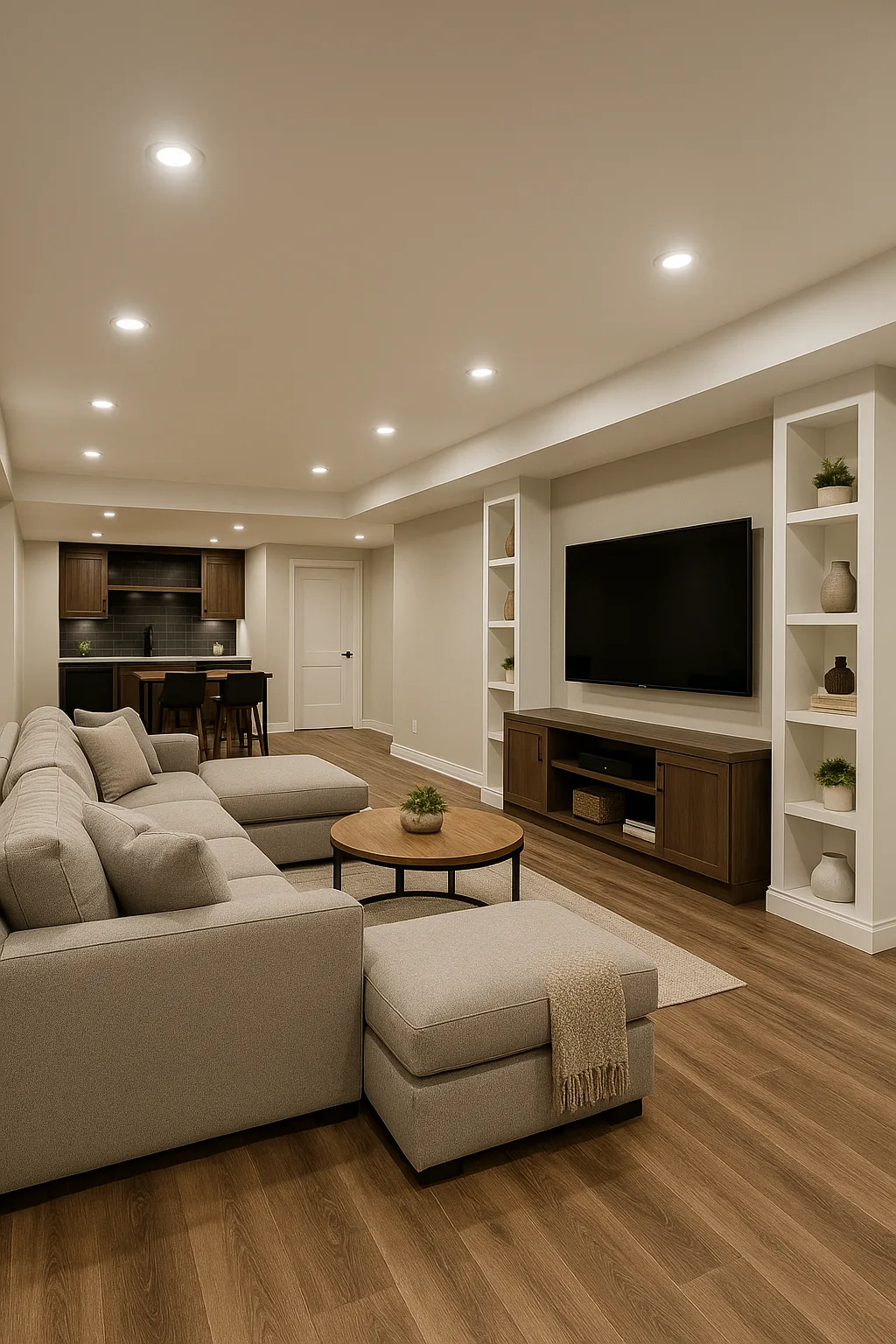
With moisture addressed and structural feasibility confirmed, the fun part begins. Popular basement layouts include:
- Recreation room and media space: The most common use, providing a dedicated family entertainment area
- Guest suite: Bedroom with egress window, bathroom, and sitting area
- Home office: Dedicated workspace with sound isolation from the main floor
- Secondary suite: Legal rental unit with kitchen, bathroom, bedroom, and separate entrance
- Home gym: Reinforced flooring, rubber matting, and dedicated ventilation
- Workshop or hobby room: Practical space with task lighting and utility finishes
Step 5: Building Permits
Basement finishing in Ontario requires a building permit if:
- You are adding a bedroom (egress window required)
- You are adding a bathroom (plumbing work)
- You are building a secondary suite
- You are doing any electrical work beyond simple fixture replacement
- You are modifying the structure in any way
JVR Complete handles the complete permit process for every basement project.
Cost Expectations (Niagara Region, 2025)
- Basic finishing (800-1000 sqft, no bathroom): $30,000-$45,000
- Mid-range finishing (with bathroom, quality finishes): $50,000-$70,000
- Premium finishing (secondary suite or high-end recreation space): $70,000-$90,000+
- Underpinning (if ceiling height requires it): add $30,000-$60,000+
These ranges include materials, labour, permits, and finishing. They do not include furniture or specialized equipment.
The JVR Complete Approach
Every basement project begins with a thorough assessment: moisture testing, height measurement, structural evaluation, and a frank discussion about what is realistic within the existing conditions. We then design a space that feels like an intentional extension of your home — not an afterthought with low ceilings and carpet tile.
If you are considering finishing your basement in the Niagara Region, contact JVR Complete for an assessment and design consultation.