The Niagara Region has one of the highest percentages of residents aged 65 and over in Ontario — approximately 23% and growing. For many of these homeowners, the desire to remain in the home they love, in the community they know, is powerful.
But homes built 30, 40, or 50 years ago were not designed for aging bodies. Bathtubs with high sides become dangerous. Narrow doorways do not accommodate mobility aids. Stairs become barriers rather than connections between floors. Lighting that seemed adequate at 40 feels dim at 70.
Aging-in-place renovation addresses these challenges. And at JVR Complete, we do it without sacrificing beauty.
The Design Problem with Accessibility
Traditional accessibility modifications — the kind you see in hospitals and care facilities — are functional but sterile. Chrome grab bars bolted to white tile. Plastic fold-down shower seats. Rubber non-slip mats. These products work, but they make a bathroom look institutional.
Many homeowners resist accessibility renovations specifically because they do not want their home to look like a medical facility. This resistance is understandable but dangerous — it means necessary safety features go uninstalled until after an accident forces the issue.
The solution is design-integrated accessibility: modifications that are beautiful first and accessible always.
Design-Integrated Accessibility Features
Curbless Showers
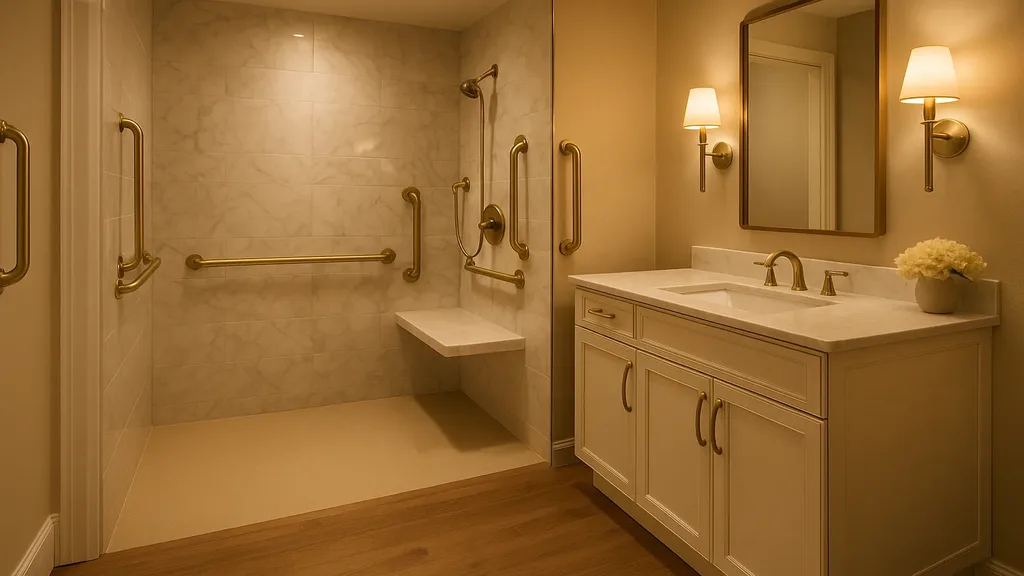
A curbless (barrier-free) shower is the centrepiece of most aging-in-place bathroom renovations. With no curb to step over, the shower is accessible to everyone — including wheelchair users, people with balance concerns, and able-bodied family members who simply prefer the sleek, modern look.
Design integration: a curbless shower with large-format porcelain tile, a linear drain along the back wall, frameless glass panels, and a built-in bench is a luxury feature in any bathroom. The accessibility is invisible because the design itself is the accommodation.
Grab Bars as Design Elements
Modern grab bars are available in brushed brass, matte black, oil-rubbed bronze, and finishes that match contemporary fixtures. When positioned thoughtfully and finished to match the bathroom’s hardware palette, they look like towel bars and decorative accents rather than safety devices.
Strategic placement:
- Vertical bar at the shower entry (assists with entry/exit)
- Horizontal bar along the shower wall at hip height (stability during bathing)
- Angled bar near the toilet (assists with sitting and standing)
- Secondary vertical bar inside the shower near the bench (seated stability)
Wider Doorways
Standard interior doorways are 28-30 inches wide. Wheelchair and walker access requires a minimum of 36 inches. Widening a doorway during a renovation is straightforward — the header is extended and the framing adjusted.
Design integration: a wider doorway with a pocket door or barn-style sliding door is a design upgrade that also provides accessibility. It looks intentional, not medical.
Comfort-Height Fixtures
Comfort-height toilets (17-19 inches versus the standard 15 inches) and raised vanity counters reduce the strain of sitting and standing. These are standard in luxury bathroom design and are available in every style and price range.
Non-Slip Flooring
Slip resistance is critical in bathrooms, but rubber mats and adhesive strips are ugly and temporary. Instead, I specify porcelain tile with appropriate slip-resistance ratings (coefficient of friction above 0.42) that looks indistinguishable from any premium floor tile. Matte and textured finishes provide grip without looking like safety equipment.
Lighting
Aging eyes need more light. I design bathrooms with layered lighting — bright, even illumination for task areas (vanity, shower) and softer ambient lighting for comfort. Motion-sensor night lights in the bathroom and hallway prevent falls during nighttime trips.
Lever Handles
Replacing round doorknobs with lever-style handles is one of the simplest and most effective accessibility modifications. Levers require no grip strength to operate and are available in every design style. This is a whole-home upgrade that benefits everyone, not just aging residents.
Planning Ahead
The ideal time to integrate accessibility features is during a renovation you were already planning. Adding a curbless shower costs marginally more than a standard shower when done during a full bathroom renovation. Widening doorways during a framing project is simple. Installing blocking behind drywall for future grab bar installation costs almost nothing.
I always recommend future-proofing: install the structural blocking for grab bars now, even if you do not need them yet. When the time comes, the bars can be added without opening walls.
The Emotional Dimension
Aging-in-place renovation is not just about physical accessibility. It is about preserving independence, dignity, and the emotional connection to home. A well-designed accessible bathroom says “this is a beautiful space designed for your comfort” — not “we installed safety equipment because you cannot manage on your own.”
That distinction matters.
If you or a family member is considering accessibility modifications in the Niagara Region, contact JVR Complete for a compassionate, design-forward consultation.