A decade ago, heated floors were a luxury feature found primarily in high-end custom homes. Today, the cost of electric radiant heating has decreased to the point where it is accessible for most bathroom renovations — and in my opinion, it has crossed the line from luxury to near-essential for any tiled floor in Ontario.
Here is why.
The Case for Heated Floors
Ontario winters are cold. Stepping onto a tile floor at 6 AM in January is a genuinely unpleasant experience. The tile surface, which was 22 degrees when you went to bed, has dropped to 16-18 degrees overnight. That thermal shock wakes you up faster than coffee, but not in a pleasant way.
Heated floors solve this completely. The tile surface is maintained at a comfortable 25-28 degrees, and stepping onto a warm floor on a January morning transforms the bathroom experience from “endurance” to “comfort.”
But heated floors provide more than comfort:
- Energy efficiency: Radiant heat warms surfaces and people directly, rather than heating air that rises to the ceiling. A heated floor in a small bathroom can reduce or eliminate the need for a baseboard heater or HVAC supply in that room.
- Moisture reduction: Warm floors evaporate residual moisture from showers faster, reducing humidity and discouraging mould growth — a real benefit in enclosed bathrooms.
- Consistent warmth: Unlike forced-air heat (which cycles on and off, creating temperature swings), radiant heat provides steady, consistent warmth.
Two Systems: Electric and Hydronic
Electric Radiant Heating (Preferred for Renovations)
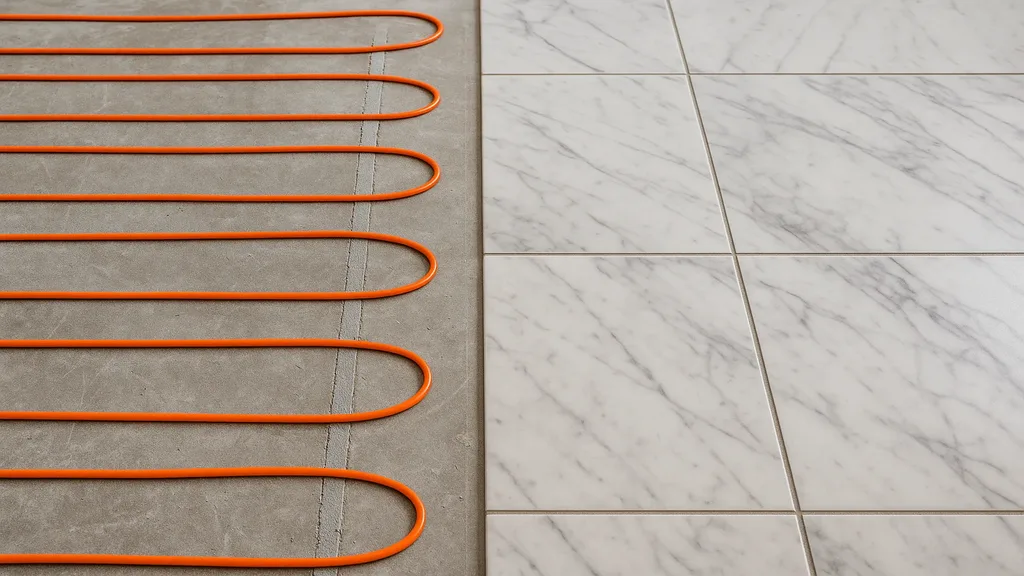
Electric systems use thin heating cables embedded in a mat or mesh that is installed directly beneath the tile. The mat is laid over the subfloor (or over a decoupling membrane like Schluter DITRA-HEAT), and tile is installed directly on top.
Advantages:
- Thin profile — adds less than 5mm to floor height
- Easy to install during a tile project (no major floor modifications)
- Excellent for retrofitting into existing bathrooms
- Individual room thermostats with programmable timers
- No mechanical maintenance (no pumps, no fluid)
Cost in Niagara:
- Materials: $10-$15 per square foot for quality systems (Schluter DITRA-HEAT, Nuheat, Warmup)
- Installation: included in the tile installation labour in most cases
- A typical 50-square-foot bathroom: $500-$750 in materials plus thermostat ($150-$300)
- Total heated floor cost for a bathroom: $700-$1,100
Operating cost: Approximately $0.30-$0.60 per day for a typical bathroom in Ontario (running 4-6 hours daily during winter months on a programmable timer).
Hydronic Radiant Heating
Hydronic systems circulate heated water through tubing embedded in the floor. They are more energy-efficient for large areas (whole-home heating) but significantly more complex and expensive to install.
Advantages:
- Lower operating cost per square foot for large installations
- Can be connected to a boiler or heat pump for whole-home heating
- Very even heat distribution
Disadvantages for renovations:
- Requires significant floor height increase (tubing plus concrete or poured gypsum topping)
- Requires a boiler or dedicated water heater
- More complex installation and ongoing maintenance
- Not practical for single-room retrofits
My recommendation: For bathroom and kitchen renovations, electric radiant heating is the clear choice. It is affordable, easy to install during a tile project, and requires zero maintenance. Hydronic is better suited for new construction where whole-home radiant heating is planned from the foundation up.
Compatible Flooring Materials
- Porcelain and ceramic tile: The ideal companion for radiant heat. Tile conducts heat efficiently and maintains temperature well. This is the primary application.
- Natural stone: Marble, travertine, and slate all work well with radiant heat, though some stones are more heat-conductive than others.
- Engineered hardwood: Compatible with radiant heat if the manufacturer approves it. Solid hardwood is not recommended (expansion and contraction can cause gaps and cupping).
- Luxury vinyl plank (LVP): Compatible up to a temperature threshold (typically 27 degrees Celsius maximum).
Installation Timing
The key point: heated floors must be planned before tile installation, not after. The heating mat or cable is installed on the prepared subfloor, and tile is laid directly over it. Retrofitting heat under existing tile requires removing and replacing the tile — essentially a full floor renovation.
If you are planning any tiled floor renovation, now is the time to decide on heated floors. The incremental cost during a renovation is minimal compared to the ongoing comfort benefit.
If you are planning a bathroom renovation in the Niagara Region, contact JVR Complete to discuss heated floors and other comfort features that elevate your daily experience.