Après des années de consultations en cuisine dans toute la région de Niagara, j'ai dressé une liste mentale des erreurs de conception que l'on retrouve dans près de la moitié des cuisines que j'évalue. Il ne s'agit pas de défauts structurels ni de manquements au code du bâtiment — ce sont des choix de conception qui sabordent une cuisine par ailleurs fonctionnelle.
Le plus frustrant, c'est que la plupart de ces erreurs coûtent autant à éviter qu'à commettre. La différence se joue dans la prise de conscience et la planification.
Erreur 1 : La cuisine à source lumineuse unique
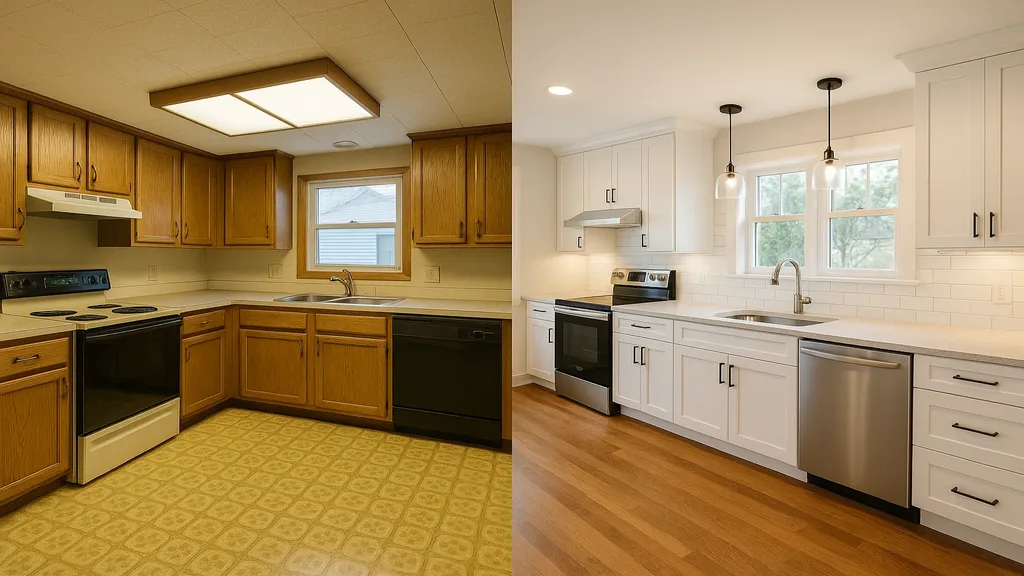
C'est l'erreur de conception la plus fréquente que je rencontre. Un seul plafonnier — généralement un luminaire encastré ou un tube fluorescent solitaire — diffuse une lumière plate et sans ombre qui donne à toute la cuisine des airs de couloir d'hôpital.
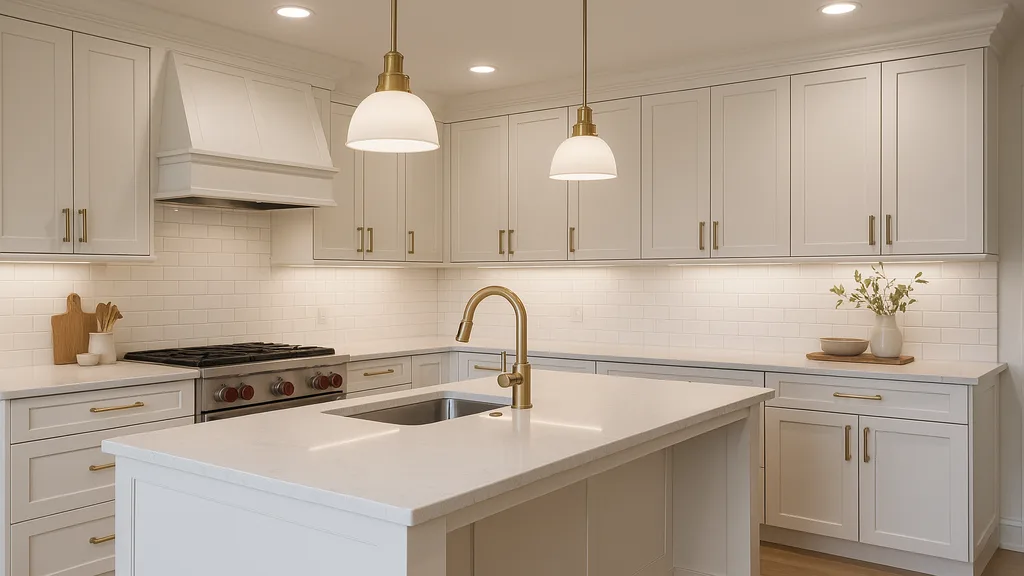
Une cuisine bien éclairée a besoin de trois couches de lumière :
- Éclairage de tâche: des rubans LED sous les armoires qui éclairent les plans de travail. Non négociable dans une cuisine moderne.
- Éclairage d'ambiance: des spots encastrés ou un luminaire central qui assure l'éclairage général de la pièce.
- Éclairage d'accentuation: des suspensions au-dessus d'un îlot, un éclairage intégré dans les vitrines d'armoires ou un éclairage en plinthe qui apporte chaleur et profondeur visuelle.
Chaque couche doit être commandée par un interrupteur ou un variateur indépendant, afin de pouvoir passer du plein éclairage propice à la cuisson à une lumière tamisée pour recevoir en soirée.
Erreur 2 : La crédence à la mauvaise échelle
L'échelle est l'un des concepts les moins bien compris en design de cuisine. Une mosaïque minuscule de 2 x 2 pouces peut paraître chargée et démodée derrière une cuisinière moderne. Une dalle massive de 24 x 48 pouces peut écraser une petite cuisine en couloir.
La crédence doit être proportionnée aux armoires, aux comptoirs et au volume général de la pièce. En règle générale :
- Les petites cuisines tirent parti des carreaux de format moyen (métro 3 x 6 ou équivalent) qui créent un rythme visuel sans surcharger l'espace
- Les grandes cuisines peuvent accueillir des carreaux grand format ou des dalles de pierre naturelle qui créent une toile de fond spectaculaire et continue
- Le motif compte autant que la taille — une pose en chevrons ou en empilement vertical peut transformer complètement le rendu d'un même carreau
Erreur 3 : Le triangle de travail bloqué
Le triangle de travail en cuisine — la relation entre l'évier, la cuisinière et le réfrigérateur — guide le design de cuisines depuis des décennies. Lorsqu'un îlot, une péninsule ou un électroménager mal placé interrompt la circulation naturelle entre ces trois pôles, la cuisine devient frustrante à utiliser, peu importe sa beauté.
Je le constate le plus souvent avec des îlots surdimensionnés. Les propriétaires veulent l'îlot le plus grand possible, sans réaliser qu'un îlot trop volumineux pour la pièce crée des dégagements trop étroits qui obligent à se faufiler de côté entre l'îlot et les comptoirs.
La règle: prévoir au moins 42 pouces (idéalement 48 pouces) de dégagement sur tous les côtés d'un îlot. Si la pièce ne permet pas ce dégagement avec l'îlot souhaité, c'est l'îlot qui doit rétrécir.
Erreur 4 : Des finitions de quincaillerie dépareillées
La quincaillerie, c'est le bijou de la cuisine, et comme un bijou, elle doit être coordonnée. Je vois régulièrement des cuisines avec des robinets chromés, des poignées d'armoires en nickel brossé, des luminaires en bronze huilé et des électroménagers en acier inoxydable — quatre finitions métalliques différentes qui se disputent l'attention.
La tendance actuelle au mélange des métaux peut donner un superbe résultat, mais elle exige de l'intention. Choisissez une finition métallique dominante pour la quincaillerie et la robinetterie, puis introduisez un (deux au maximum) métal d'accent par touches plus petites et délibérées.
Erreur 5 : Oublier le rangement
Cela peut paraître évident, mais de nombreuses rénovations de cuisine réduisent en fait l'espace de rangement utilisable. Les propriétaires retirent les armoires supérieures pour des étagères ouvertes (qui contiennent moins et nécessitent un rangement constant), installent une hotte décorative qui élimine un compartiment d'armoire, ou choisissent exclusivement des tiroirs sans considérer que certains articles sont mieux rangés sur des étagères.
Avant de finaliser toute conception de cuisine, j'inventorie le contenu existant de la cuisine du client et je planifie le rangement pour accueillir tout ce qu'ils utilisent réellement — plus 15 % d'espace de croissance.
Erreur 6 : Erreurs de porte-à-faux de comptoir
Un porte-à-faux de comptoir d'îlot pour les sièges doit avoir au moins 12 pouces de profondeur pour être confortable, 15 pouces étant l'idéal. Je vois régulièrement des porte-à-faux de 8 ou 9 pouces — juste assez profonds pour que quelqu'un essaie de s'y asseoir, mais pas assez pour être confortable. Les tabourets finissent par être poussés sur le côté, et l'espace de sièges reste inutilisé.
Considérez également la hauteur : une hauteur de comptoir standard de 36 pouces nécessite des tabourets de comptoir de 24 pouces. Une hauteur de bar surélevée de 42 pouces nécessite des tabourets de bar de 30 pouces. Mélanger ces éléments signifie soit des pieds qui pendent, soit des genoux à l'étroit.
Erreur 7 : Négliger la ventilation
Une belle hotte de cuisine qui ne ventile pas réellement vers l'extérieur n'est qu'une boîte décorative. Les hottes à recirculation filtrent une partie de la graisse mais ne font rien pour la chaleur, l'humidité ou les odeurs de cuisson. Si vous investissez dans une rénovation de cuisine, investissez dans une ventilation adéquate avec un conduit d'évacuation extérieur.
La solution axée sur la conception
Chacune de ces erreurs est évitable avec une planification de conception adéquate avant le début de la construction. Chez JVR Complete, la phase de conception est celle où nous détectons ces problèmes — et non après l'installation des armoires et le jointoiement du carrelage.
Si vous planifiez une rénovation de cuisine à St. Catharines ou n'importe où dans la région de Niagara, contactez JVR Complete pour une consultation de conception qui prévient les erreurs coûteuses.